Last updated October 31, 2026
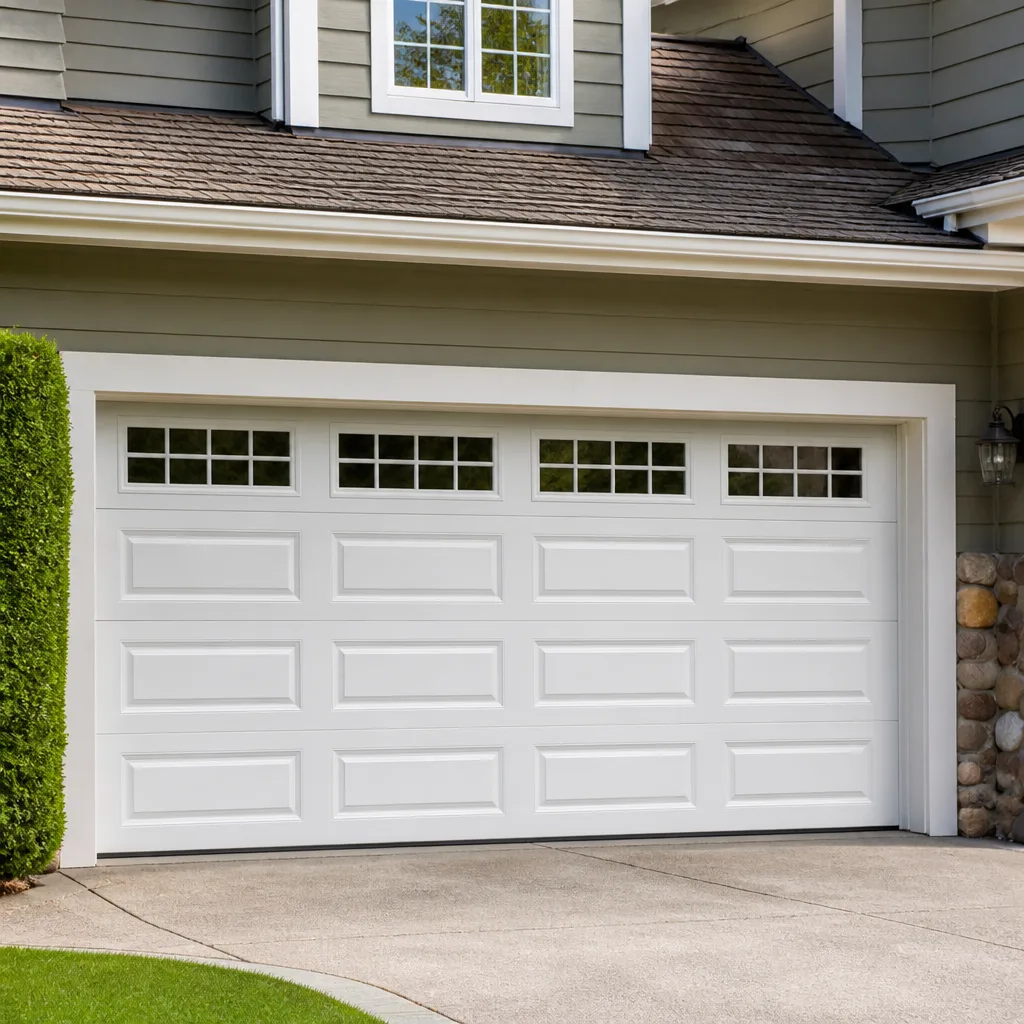 Raised-panel steel
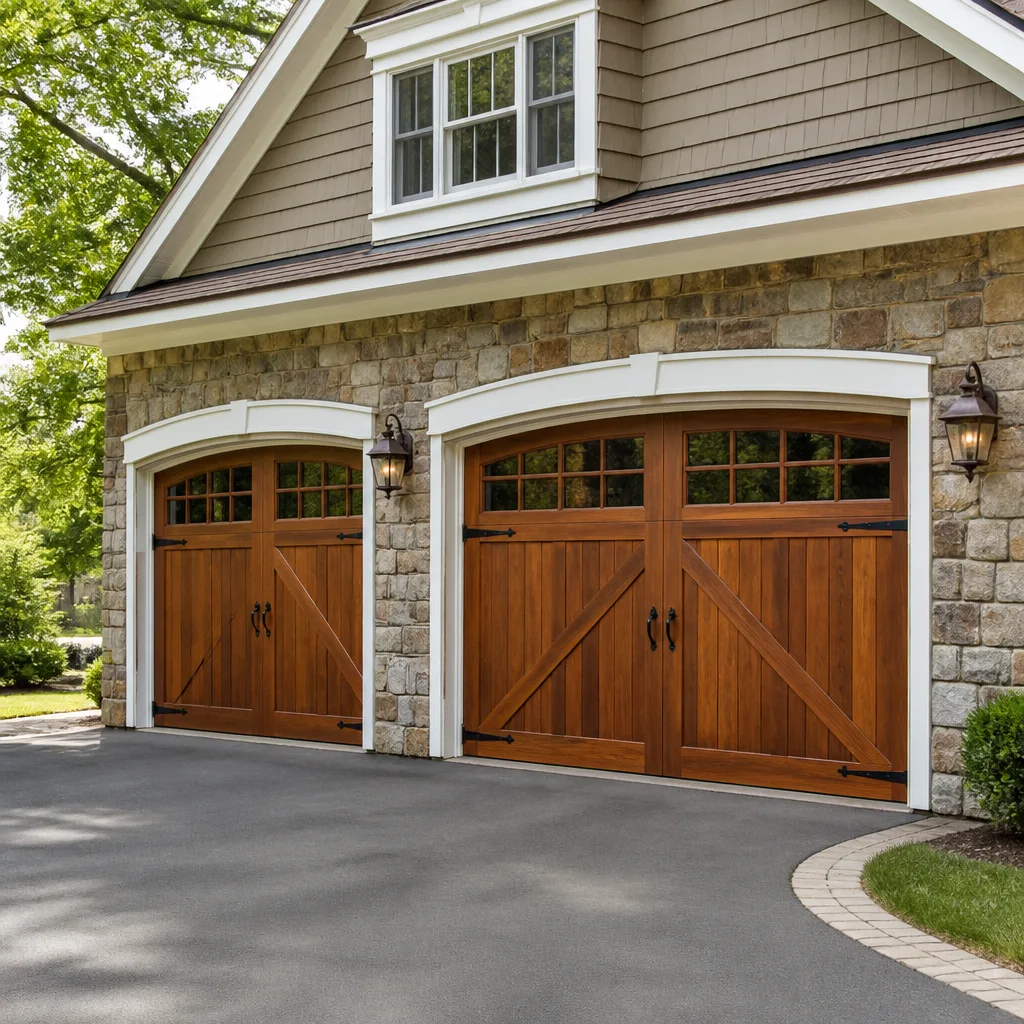 Carriage house
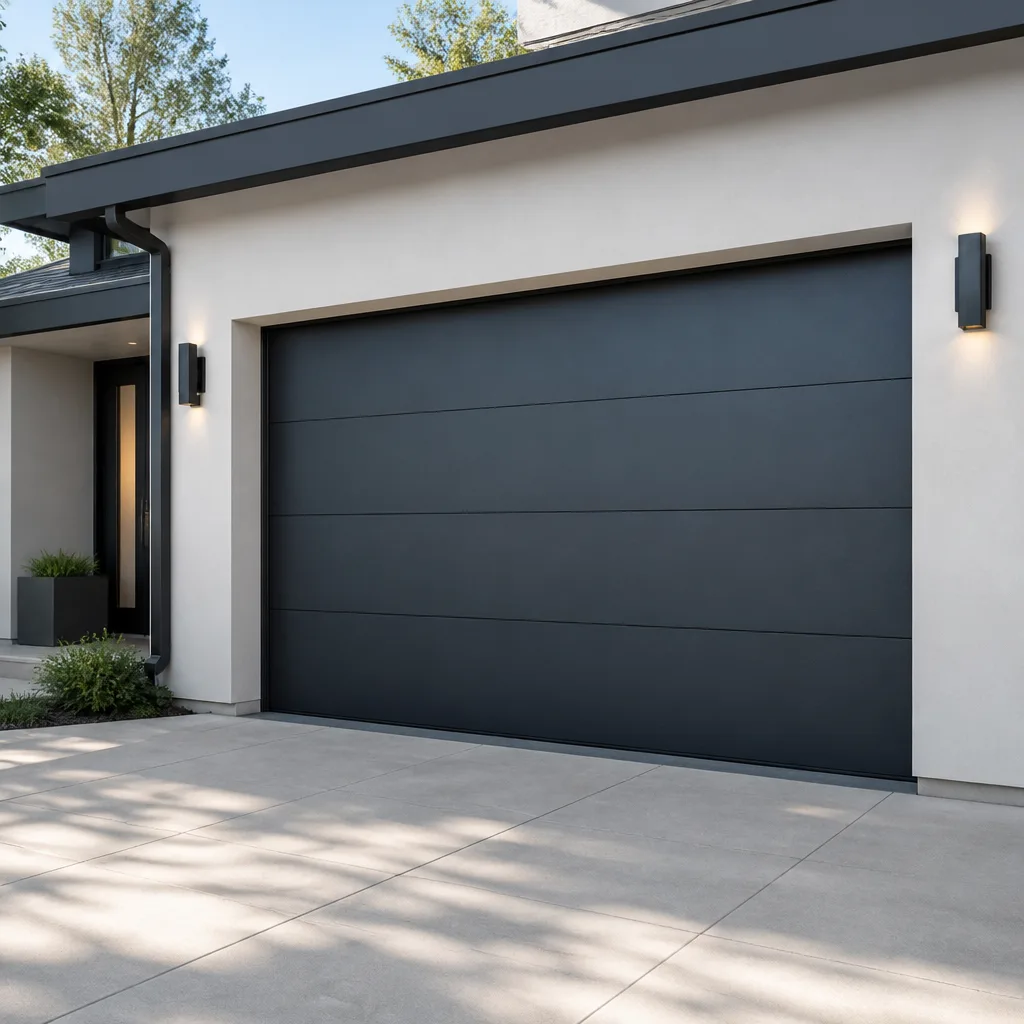 Modern flush
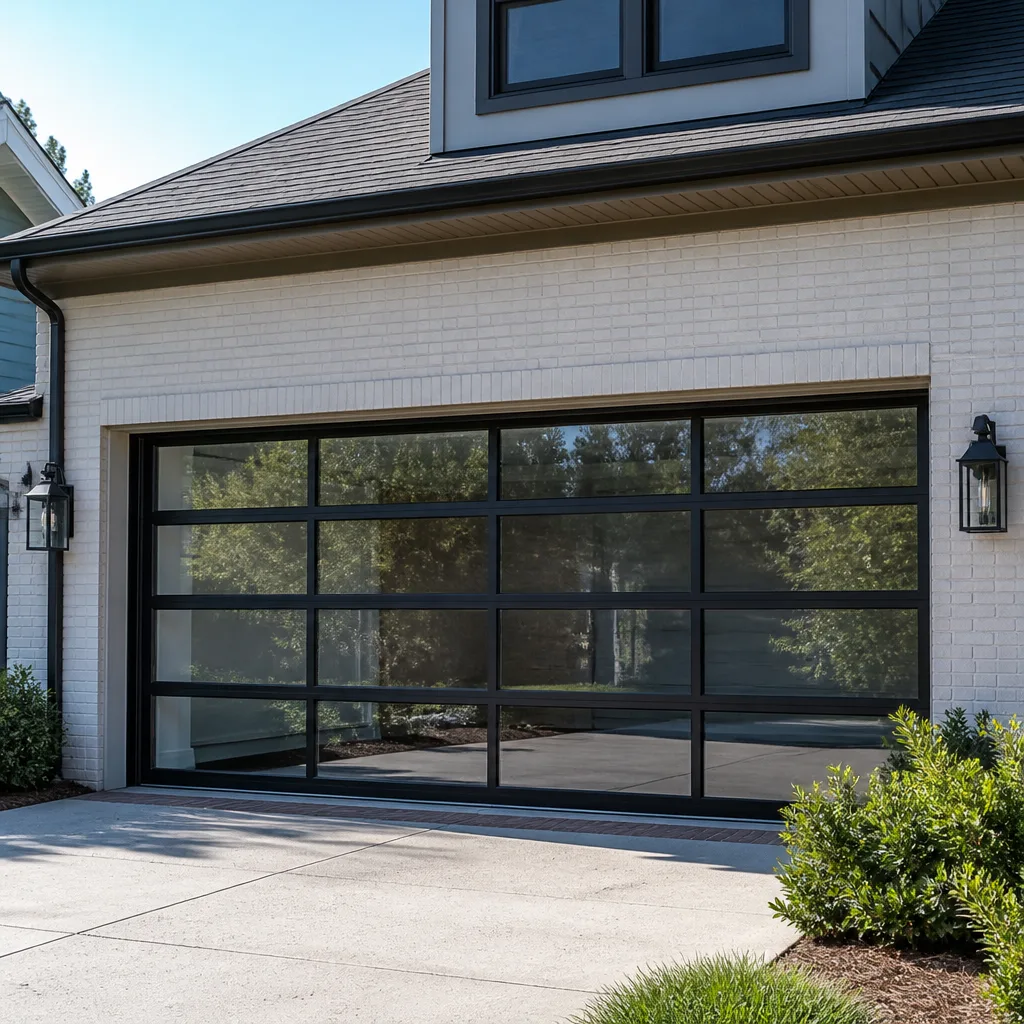 Full-view glass
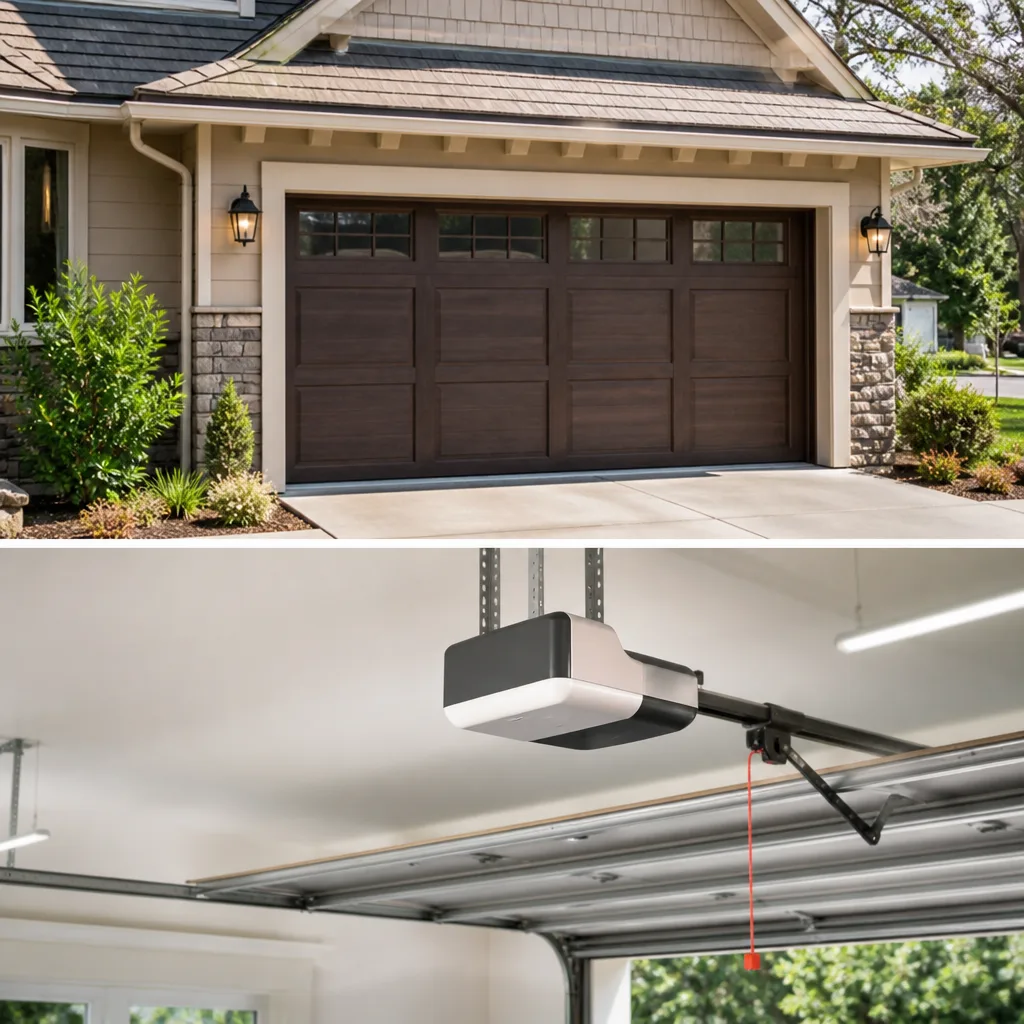 LiftMaster openers
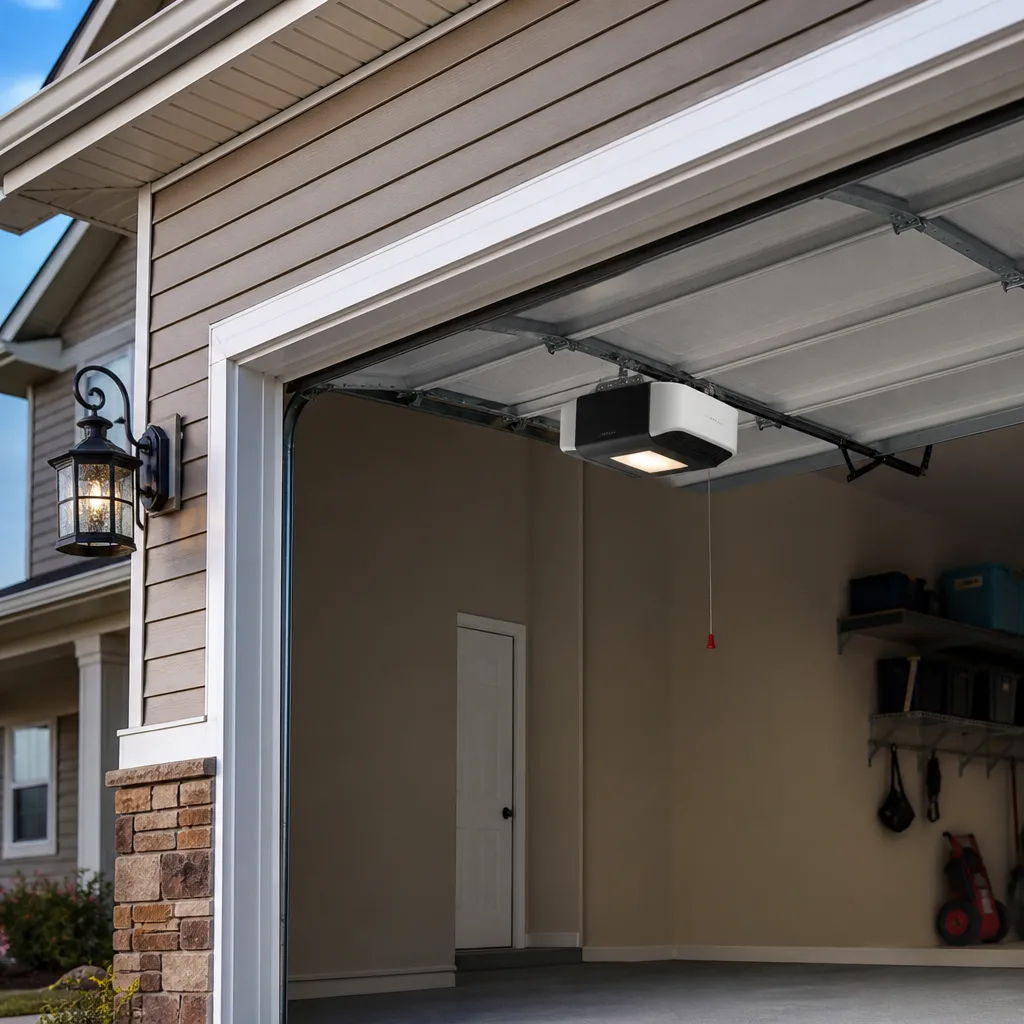 Chamberlain openers
Full 25-point door and opener safety check with every visit - springs, cables, rollers, tracks, and your LiftMaster or Chamberlain opener included
You get a price before we start. It does not change when the truck arrives.
Get your free estimateGarage Door Warning Signs: A West Hollywood Homeowner’s Reference Guide
Most garage door failures in West Hollywood don’t start with a dramatic crash. They start with a door that takes two seconds longer to open than it did six months ago, or a faint grinding sound you’ve already tuned out. By the time a spring snaps or a cable lets go, the warning signs have usually been present for weeks. This guide covers the early signals most homeowners miss, what they mean, and which ones genuinely need a professional’s attention before they turn into a $900 repair or a safety hazard. For how to hire a garage door contractor in West Hollywood: a step-by-step guide, see our companion resource. If your door is already making noise, hanging unevenly, or acting slower than it used to, you’ll find the specific diagnosis here.
Styles & brands we work with
Quick Answer
The most common garage door warning signs in West Hollywood homes are a door that’s slower than it used to be, a grinding or popping sound during operation, visible asymmetry when the door is halfway up, and rust or corrosion on the inside face of the door. Any one of these signals indicates a mechanical problem that will likely worsen within 30 to 90 days. If you notice any of them, a professional inspection now costs far less than an emergency repair after the failure.
Table of Contents
- Sound-Based Diagnostics: What Each Noise Actually Means
- Visual Asymmetry: The 2-Inch Warning Sign
- Response-Time Drift: The Slowdown You Shouldn’t Ignore
- West Hollywood-Specific Corrosion Patterns
- The 60-Second Balance Test
- Opener Warning Signs: The Electronics Half of the System
- Common Mistakes to Avoid
- When to Call a Professional
- Frequently Asked Questions
- The Bottom Line
Sound-Based Diagnostics: What Each Noise Actually Means
Your garage door talks to you every time it opens and closes. The problem is that most West Hollywood homeowners have heard the same sounds for so long they’ve stopped registering them as information. Here’s what we listen for when a homeowner calls us about a “weird noise” and what each sound typically implicates.
Grinding is the sound of metal on metal without adequate lubrication or with components that have worn past their tolerance. When a LiftMaster or Chamberlain opener produces a grinding sound, it’s often the drive gear inside the opener itself wearing down. When the grinding comes from the door panels or track, it usually means rollers have lost their bearings or the track has shifted out of alignment. Grinding that gets louder over a few weeks is a countdown, not a quirk.
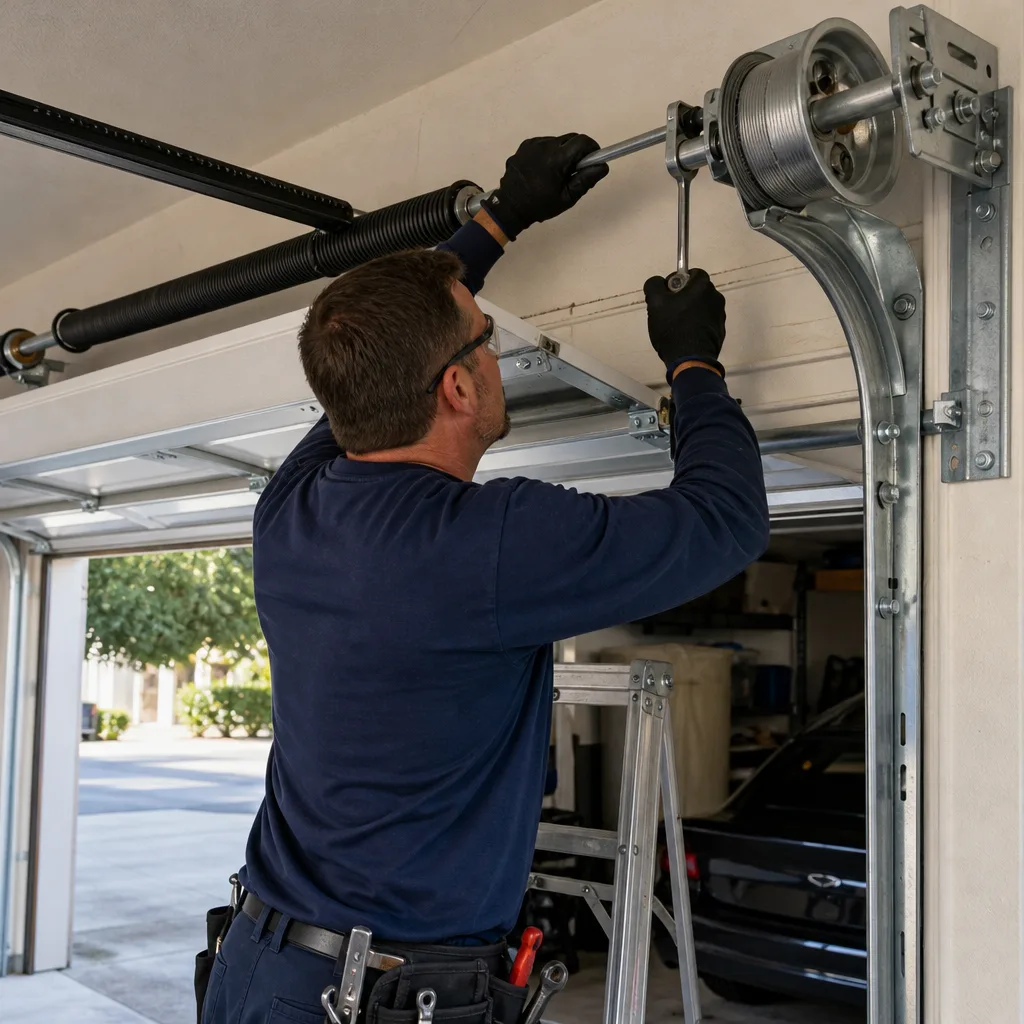
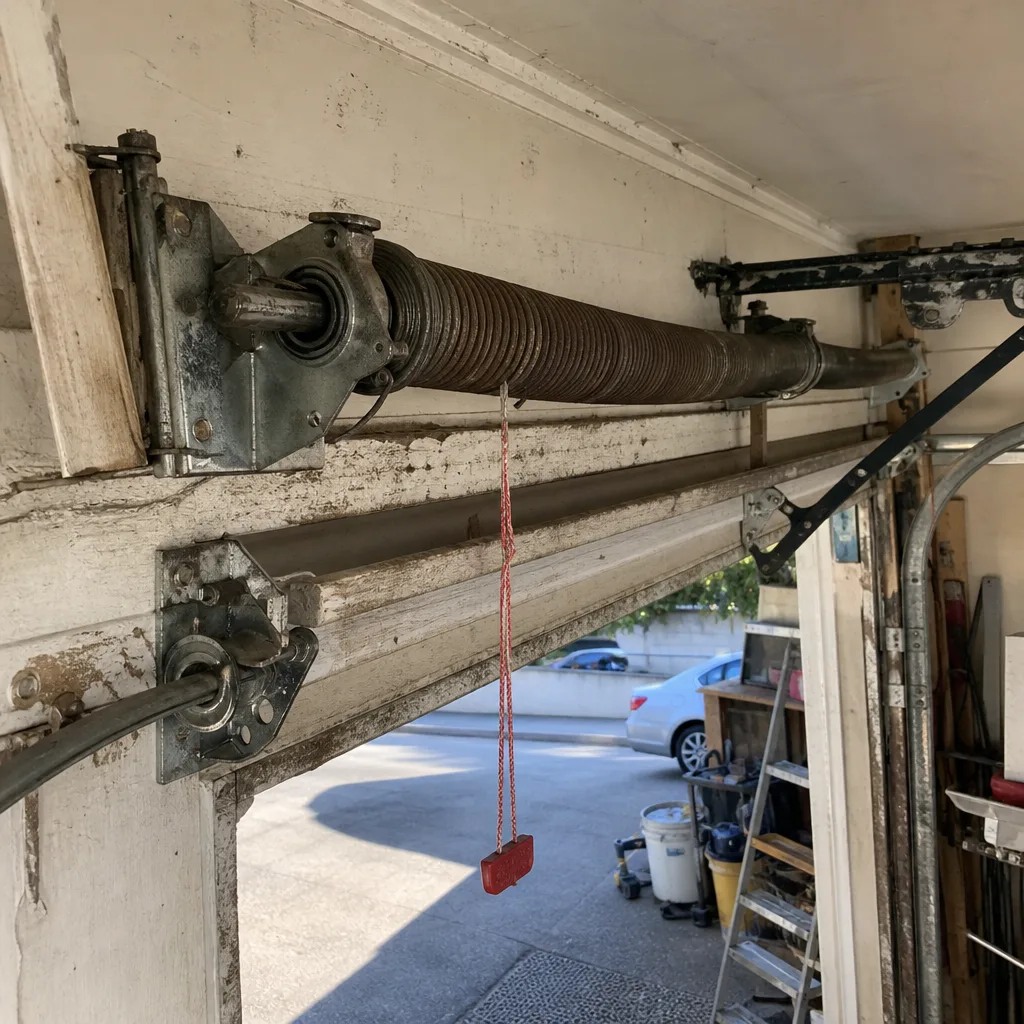
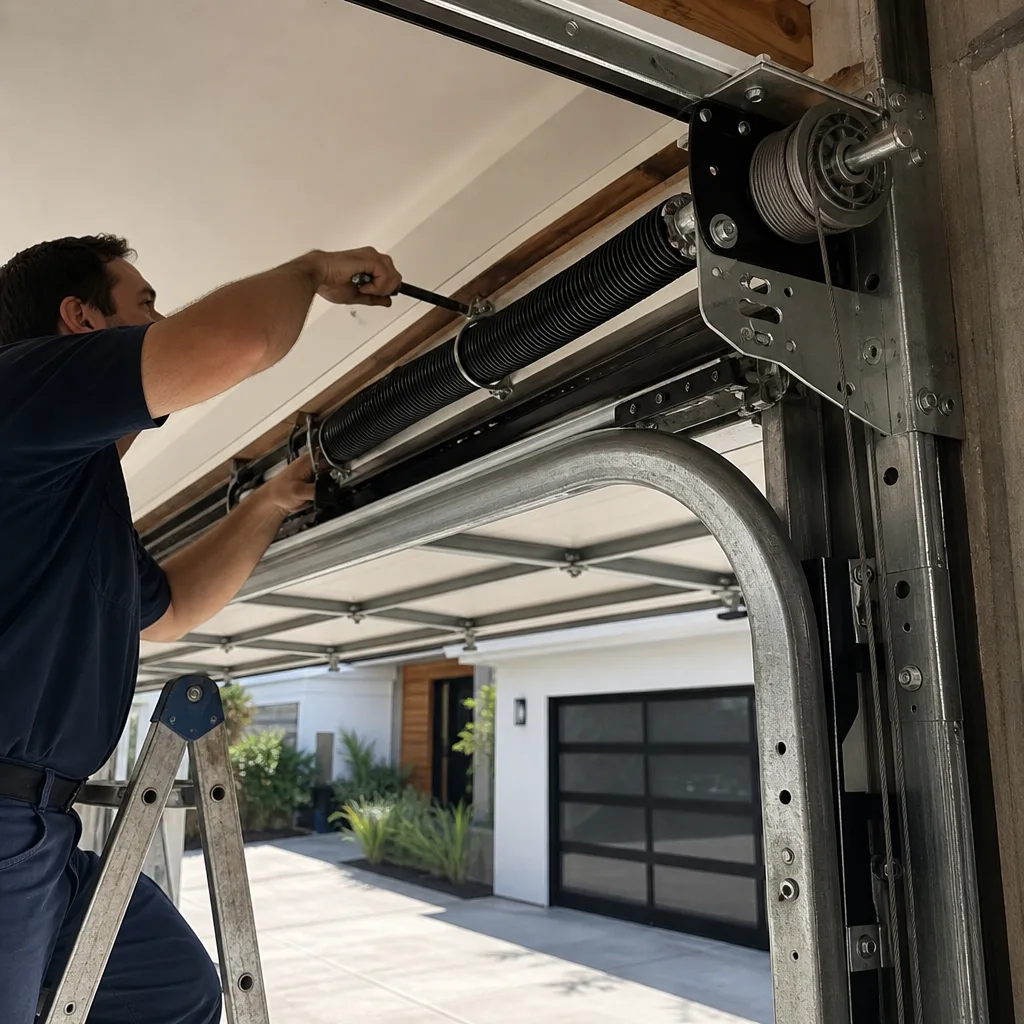
Popping is a spring sound. When a torsion spring winds or unwinds, it stores and releases thousands of pounds of tension. A single pop during operation often means a section of coil is binding or a spring is beginning to fatigue. Multiple pops in sequence can indicate the spring is actively failing. This is the sound you hear right before a spring breaks completely, and it’s one of the few sounds on this list that warrants same-day attention. A broken torsion spring makes the door effectively unmovable and can cause serious injury if someone tries to force it open manually.
Scraping is almost always a track or roller issue. The sound of metal dragging against metal suggests the door has drifted laterally and the rollers are now contacting the track the wrong way. In West Hollywood, where many homes have alley-loaded garages, scrapes are often preceded by a vehicle bumping the track or the jamb. Even a half-inch shift in the track produces a scrape that gets worse every cycle.
Rattling is loose hardware. Bolts, nuts, and hinges work themselves loose over thousands of open-close cycles. A rattle is your door telling you that specific fasteners need to be tightened before the loosened component allows something larger to shift. It’s the most benign sound on this list, but also the easiest to fix early. On Amarr and Wayne Dalton doors, which use a specific hinge pattern, a rattle near the top panel often means the top fixture has loosened, which is load-bearing.
Here’s the rule of thumb we give homeowners: if you can hear your garage door from inside your living room, something has changed. Doors that are functioning correctly are quiet enough to be background noise. A new sound is always information.
Visual Asymmetry: The 2-Inch Warning Sign
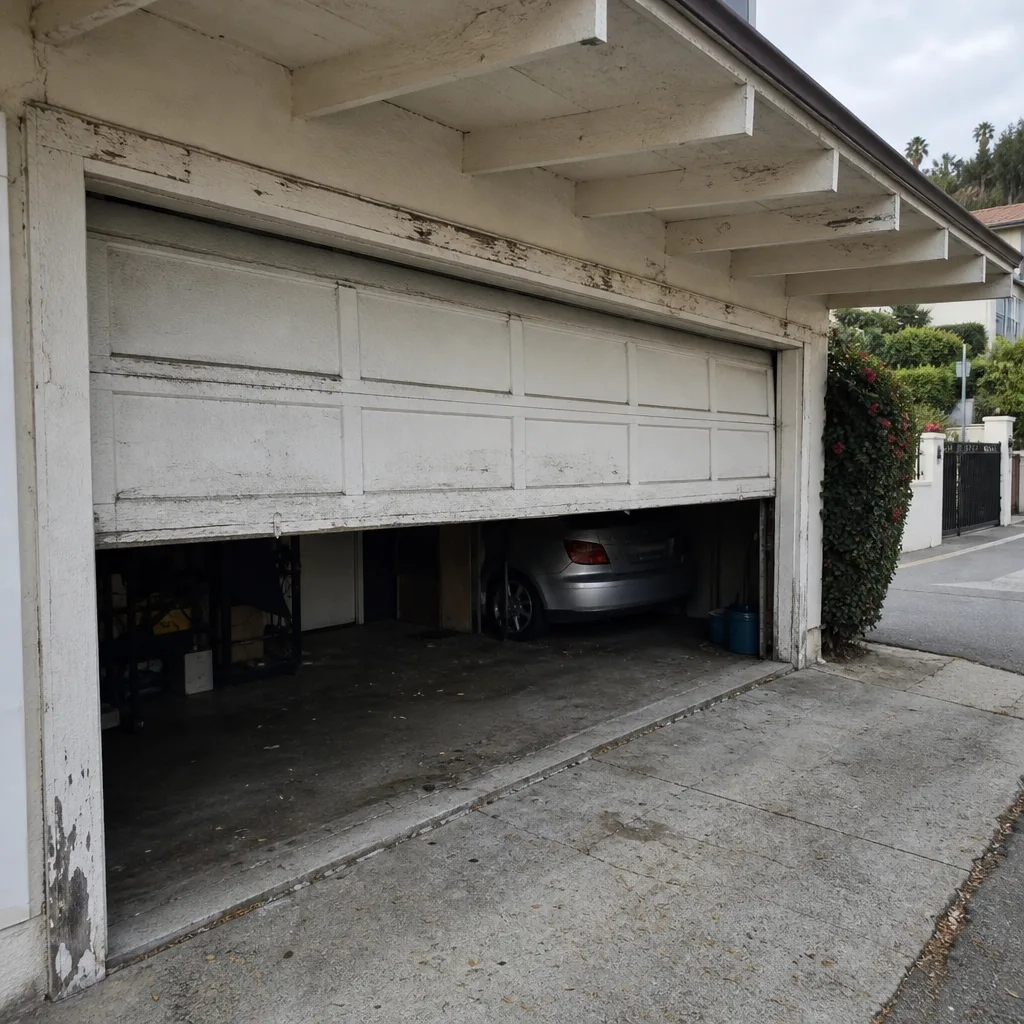
Stand outside your closed garage door and look at the gap between the bottom of the door and the ground. Now look at the gap on the left versus the right. If they’re different, you have an imbalance. The same check works when the door is open halfway: if one side sits visibly lower than the other, the cables or springs are not carrying the door’s weight evenly.
This asymmetry is the single most reliable visual warning sign we see in West Hollywood garages, and it’s almost always ignored because the door still works. A door that hangs one to two inches lower on one side is in the early stage of a cable or spring imbalance. The heavier side of the door is doing more work, which accelerates wear on that side’s roller, hinge, and cable. Left unaddressed, the imbalance worsens until a cable slips off the drum or a spring fatigues unevenly and snaps.
The asymmetry itself is rarely visible in a casual glance. You have to look for it. When we diagnose an imbalance, we check three things: the gap at the bottom when closed, the height of each side when the door is halfway up, and the way the cables sit on the drums when the door is at rest. A cable that’s slightly loose on one drum is often the earliest physical evidence of a spring that’s no longer producing equal torque across its length.
Climate plays a role here too. West Hollywood’s combination of coastal moisture and summer heat cycles causes metal components to expand and contract daily. Over enough cycles, a spring that started perfectly balanced can lose a few pounds of effective tension on one side. The result is a door that looks “fine” but is quietly wearing itself out unevenly. The Garage Door Repair in Burbank team sees the same pattern across the 101 corridor in homes of similar vintage.
If you spot asymmetry, measure it. Use a tape measure on both sides when the door is closed. A difference of half an inch or less is usually within tolerance. An inch or more is a reason to call. Two inches is a repair that should happen within the week, not the month.
Response-Time Drift: The Slowdown You Shouldn’t Ignore
A garage door that “works fine but seems slower” is the most frequently dismissed warning sign we hear about, and it’s also one of the most actionable. Your opener operates on a timer. It’s not supposed to get slower. If it is, the motor is working harder than it did when the system was healthy, and the extra effort is coming from somewhere mechanical.
Here’s what a measurable slowdown typically means. The average residential door takes about 12 to 15 seconds to open fully. If yours used to take that long and now takes 17 or 18 seconds, the opener motor is compensating for added resistance. That resistance almost always comes from one of three sources: a spring that has lost tension and is no longer counterbalancing the door’s weight, rollers that have worn and are dragging instead of rolling, or a track that has shifted and is pinching the door’s travel path.
In each case, the opener is now doing the door’s share of the work. Openers are not designed to lift a full garage door on their own. They’re designed to push a door that the springs have already made weight-neutral. When the springs weaken, the opener strains. A Craftsman or Raynor opener that’s six years old might handle that strain for a few months. Then the drive gear strips, or the motor burns out, and you’re replacing a $375 opener because a $90 spring adjustment was ignored.
We tell West Hollywood homeowners to time their door. Open it from fully closed and count. Do it once a season. If the time has crept up by more than two seconds, something has changed. The door itself hasn’t gotten heavier. The system has gotten less efficient.
The opener’s behavior during the slowdown matters too. A door that slows down progressively but smoothly is usually a spring or roller issue. A door that hesitates, jerks, or stutters at a specific point in its travel is more likely a track obstruction or a failing opener logic board. Smooth slowdowns are mechanical. Jerky ones are often electronic, though not always. The Garage Door Opener Repair in Burbank page covers opener-specific diagnostics if the problem is in the motor or logic board.
West Hollywood-Specific Corrosion Patterns
Garage doors in West Hollywood corrode differently than garage doors in the Valley or inland. It comes down to two local factors: marine air and alley surface vibration.
The marine layer that rolls through the Hollywood Hills and settles over the flats each night carries salt and moisture. Your garage door’s exterior face gets some of this, but it’s the interior face that suffers most. The exterior gets sun and airflow. The interior face of the door sits in a shaded, relatively humid microclimate for hours each day. Metal hinges, roller brackets, and the bottom fixtures on the inside of the door are where we consistently find corrosion in West Hollywood homes, especially on doors that face west and catch the evening marine push.
The corrosion pattern is distinctive. It starts as a dull, chalky film on the zinc plating of hinges and brackets. Then pitting begins at the fastener holes, where moisture sits longest. By the time a hinge shows rust staining, the metal behind the zinc plating has already lost structural integrity. A corroded hinge can still look attached while being dangerous brittle.
Alley surface vibration is the second local factor. Many West Hollywood homes are alley-loaded, which means the garage door sits at the end of a driveway or directly on the alley where refuse trucks, delivery vans, and rideshare pickups rumble by daily. This constant low-frequency vibration works through the door’s fasteners like a paint shaker. Bolts don’t fail suddenly. They back out a quarter turn at a time over months. The first sign is often a rattle. The second is a hinge or track bracket that’s visibly loose.
What to check: open your garage door, step inside, and inspect the hinge plates and roller brackets on the inside face. Look for chalky white or orange residue, especially at screw holes. Wiggle each hinge with a gloved hand. There should be no play. On Wayne Dalton and Amarr doors, which use steel hinge systems, corrosion at the bottom fixture is the leading cause of panel separation in coastal microclimates. If you’re weighing brands, our choosing the right garage door brand: a buyer’s guide for West Hollywood covers which systems hold up best here.
This is also a reason to take the Golden Bear Garage Door Repair home approach to maintenance seriously: these problems compound. Corrosion weakens a hinge, the weakened hinge allows panel shift, the panel shift throws off the track alignment, and the misaligned track burns out the opener. One rusty bracket can start that chain.
The 60-Second Balance Test
This is the single most useful diagnostic you can do on your garage door, and it takes one minute. The balance test tells you whether your springs are still doing their job. Here’s how it works.
- Pull the emergency release cord. This red cord hangs from the opener rail. Pulling it disconnects the opener carriage from the door, which lets the door move freely.
- Lift the door manually to the halfway point. Use both hands on the door’s bottom edge or handle. Bring it up to approximately waist height and let go.
- Observe what happens. A properly balanced door will stay where you left it, or move only slightly up or down before settling. This means the springs are supporting the door’s weight.
- If the door drops, the springs are under-tensioned and have lost some of their counterbalance force. The opener has been compensating, which means wear is accelerating.
- If the door rises on its own, the springs are over-tensioned, which is less common but also a problem. An over-tensioned spring is under constant stress and more prone to a sudden break.
- Reconnect the opener. Pull the release cord toward the door and operate the opener once. It will reconnect automatically.
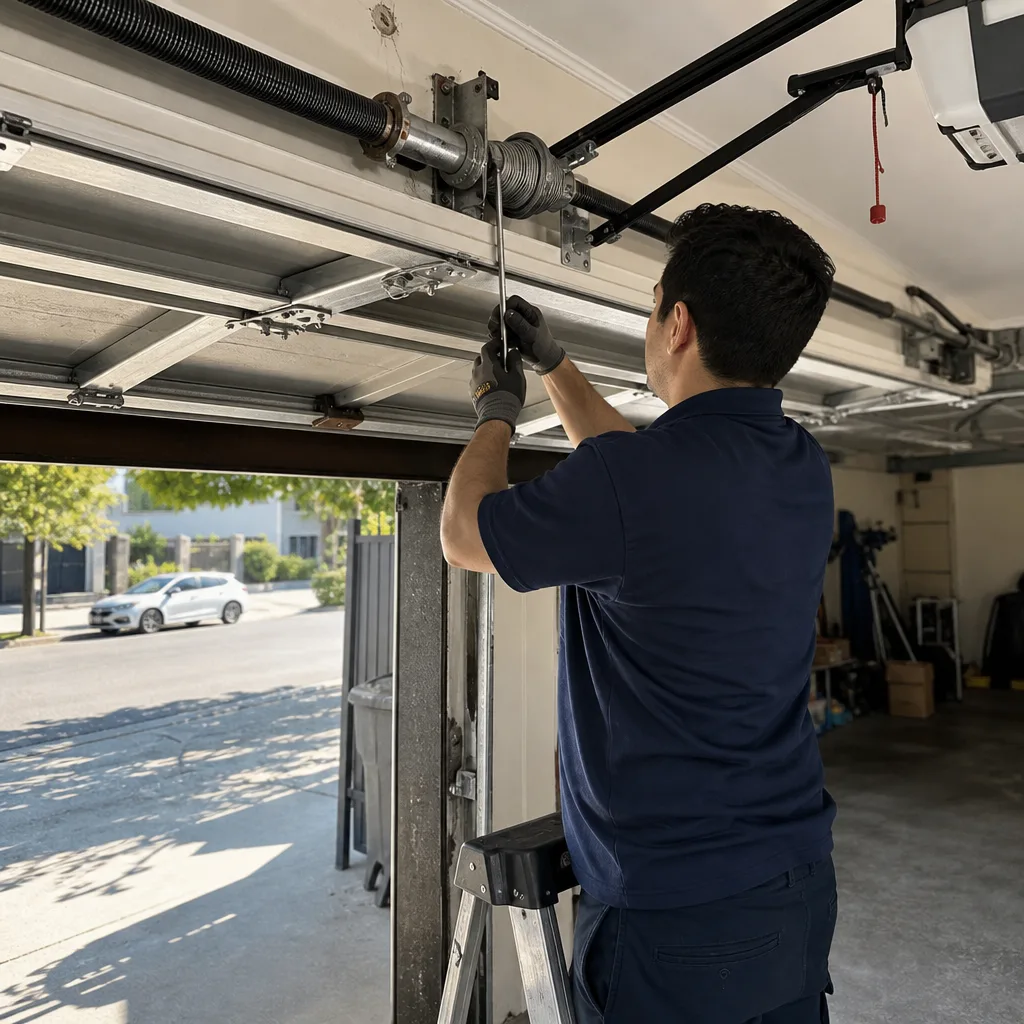
A door that drops in this test is the clearest early signal that a spring replacement is coming. And a spring replacement is not a DIY job. Torsion springs hold enough tension to cause severe injury if mishandled. If your door fails the balance test, call a professional. We replace springs on LiftMaster, Chamberlain, Genie, and every other major opener system with the door in place, which means we’re also checking the full track, roller, and cable assembly while we’re on site.
Do this test twice a year. Early spring and late fall work well for West Hollywood, since the seasonal temperature shift between marine-layer months and Santa Ana months produces the most measurable tension drift.
Opener Warning Signs: The Electronics Half of the System
The door is the mechanical half of the system. The opener is the electronic half. Both wear, but the warning signs are different. A door announces its problems through sound and asymmetry. An opener announces its problems through behavior.
The opener runs, but the door doesn’t move. This usually means the carriage has become disconnected, often because the travel limits were misadjusted or the gear has stripped inside the motor housing. It’s a common end-stage failure on Chamberlain and LiftMaster belt-drive units that have been running against a weakening spring for months.
The opener reverses immediately after touching the floor. This is a force-limit setting issue most of the time, but it can also indicate that the door’s bottom seal has worn and the opener is sensing increased contact resistance. If adjusting the limits doesn’t fix it, the motor’s force sensor may be failing.
The opener works intermittently. In West Hollywood, intermittent operation is often thermal. An opener motor that has been straining against a spring that’s lost tension runs hotter than it should. The thermal overload switch trips, the motor shuts down, and it works again after cooling off. If your door works fine in the morning and refuses to open in the afternoon heat, the motor is overheating and the root cause is usually mechanical resistance, not electronics.
The opener is loud even when the door is disconnected. Disconnect the door using the emergency release and run the opener. If it’s still loud, the problem is inside the opener itself: a worn gear, a dry sprocket, or a failing motor bearing. If it’s quiet, the noise was coming from the door, not the opener.
Any of these opener signals means the system should be looked at. And because we service the mechanical door and the electronic opener as one integrated system, the diagnosis doesn’t get split across two companies. That matters when the root cause is a spring problem masquerading as an opener problem, which it often is. If the opener has already failed and needs replacement, our Garage Door Installation in Burbank team handles full opener replacement with the door’s existing track and panels.
Common Mistakes to Avoid
- Lubricating the problem away. A garage door that grinds or squeaks may need lubricant, but lubrication doesn’t fix a worn roller bearing or a misaligned track. In West Hollywood’s dry season, homeowners often spray lubricant on a door that actually has a structural issue, which masks the sound for a few weeks while the underlying problem worsens.
- Adjusting the opener force limits to compensate for a heavy door. When a spring weakens, the door feels heavy and the opener strains. Some homeowners turn up the force setting to make the door open. This forces the opener to push through a mechanical problem it was never designed to handle, and it substantially shortens the motor’s life.
- Ignoring the slowdown because “it still works.” A door that takes 18 seconds instead of 12 is not “working fine.” It’s working harder. By the time it stops working, the repair bill is usually two to three times what it would have been at the early-signal stage.
- Trying to fix a visibly loose cable. Garage door cables are under high tension at all times, even when the door appears to be at rest. A cable that looks loose or sits off the drum should be handled only by a professional. Attempting to reseat it without releasing spring tension causes serious injury every year.
- Waiting until the door won’t open to call. Once a spring breaks or a cable snaps, the door becomes a dead weight. Emergency calls cost more than scheduled maintenance, and in West Hollywood, where many garages open directly onto alleys, a stuck door can block your vehicle and your trash access.
- Replacing panels instead of diagnosing the source. If a panel is dented or cracked, the source matters. A door that’s been dropping on one side may have been hitting the ground unevenly for months. Replacing the panel without fixing the spring imbalance means the new panel takes the same uneven stress.
- Assuming rust on the exterior is the only rust that matters. The exterior face of a garage door can look fine while the interior face is corroding. If you only check the outside, you’ll miss the hinge and bracket corrosion that typically precedes mechanical failure in coastal-air homes.
When to Call a Professional
Some garage door issues you can live with for a few weeks. Others need attention quickly. Call a professional if you hear a popping sound during operation, if the door fails the balance test, if one side hangs visibly lower than the other, if the door has become measurably slower, or if you see a cable that’s loose or off its drum. Any one of these indicates a system under stress, and the repair cost now is a fraction of the emergency cost after failure. Never attempt to adjust, remove, or replace a torsion spring yourself. The tension in a single residential spring can exceed 150 pounds per square inch. Golden Bear Garage Door Repair offers free estimates in West Hollywood and the surrounding area, and we’ll tell you what’s wrong before we quote a fix. Call (833) 467-4118.
Frequently Asked Questions
A single torsion spring replacement in West Hollywood typically runs between $180 and $340 including parts and labor, with double-spring systems costing more because both springs should be replaced at the same time. Most homes in the area use torsion spring systems, and we quote the exact price before any work begins. Call (833) 467-4118 for a free estimate on your specific door.
A standard torsion spring is rated for approximately 10,000 open-close cycles, which translates to about 7 to 10 years for a typical West Hollywood household that cycles the door three to four times daily. Homes that use the garage as a primary entrance often top 15,000 cycles and need replacement sooner. The cycle rating matters more than the calendar age of the spring.
Yes, in most cases we can repair a garage door or opener the same day you call, especially for broken springs, cables, and opener failures. Repair work like spring replacement and roller replacement is done from stocked truck inventory, which means the diagnosis and the fix happen in the same visit. Call (833) 467-4118 and we’ll give you a straight answer on your specific situation.
No. The price we quote before starting is the price you pay. We diagnose the door first, explain what it needs, and get your approval on a written number before any work begins. If we find additional issues during the repair, we stop and show you before proceeding. No invoice surprises.
Yes. Our trucks are stocked with common replacement parts for LiftMaster, Chamberlain, Genie, Clopay, Amarr, Wayne Dalton, Craftsman, and Raynor systems, including springs, cables, rollers, hinges, and opener gears. That’s why most same-day repairs in West Hollywood are completed in one visit rather than scheduling a follow-up after a parts order arrives.
Metal components contract in cooler temperatures, which tightens clearances and makes existing wear more audible. In West Hollywood, the temperature swing between marine-layer nights and warmer afternoons produces a noticeable difference in door noise, even inside a single day. If the noise persists after the temperature stabilizes, it’s mechanical wear, not weather, and it should be diagnosed.
The Bottom Line
Your garage door warns you before it fails. The warning shows up as a slowdown, a new sound, an uneven hang, or rust on the inside face of the door. Each of these signals is diagnosable, and each has a specific fix that costs dramatically less now than the emergency it precedes. A door that’s working harder today will fail sooner. The best time to address a warning sign is the week you notice it. The worst time is the morning you’re already late and the door won’t lift. If you’ve spotted any of the signs in this guide, call (833) 467-4118. We’ll come out, diagnose the system, and give you a straight answer and a written price. For more guides & resources, visit our blog.
Written by the team at Golden Bear Garage Door Repair, serving West Hollywood since 2016.
See the difference
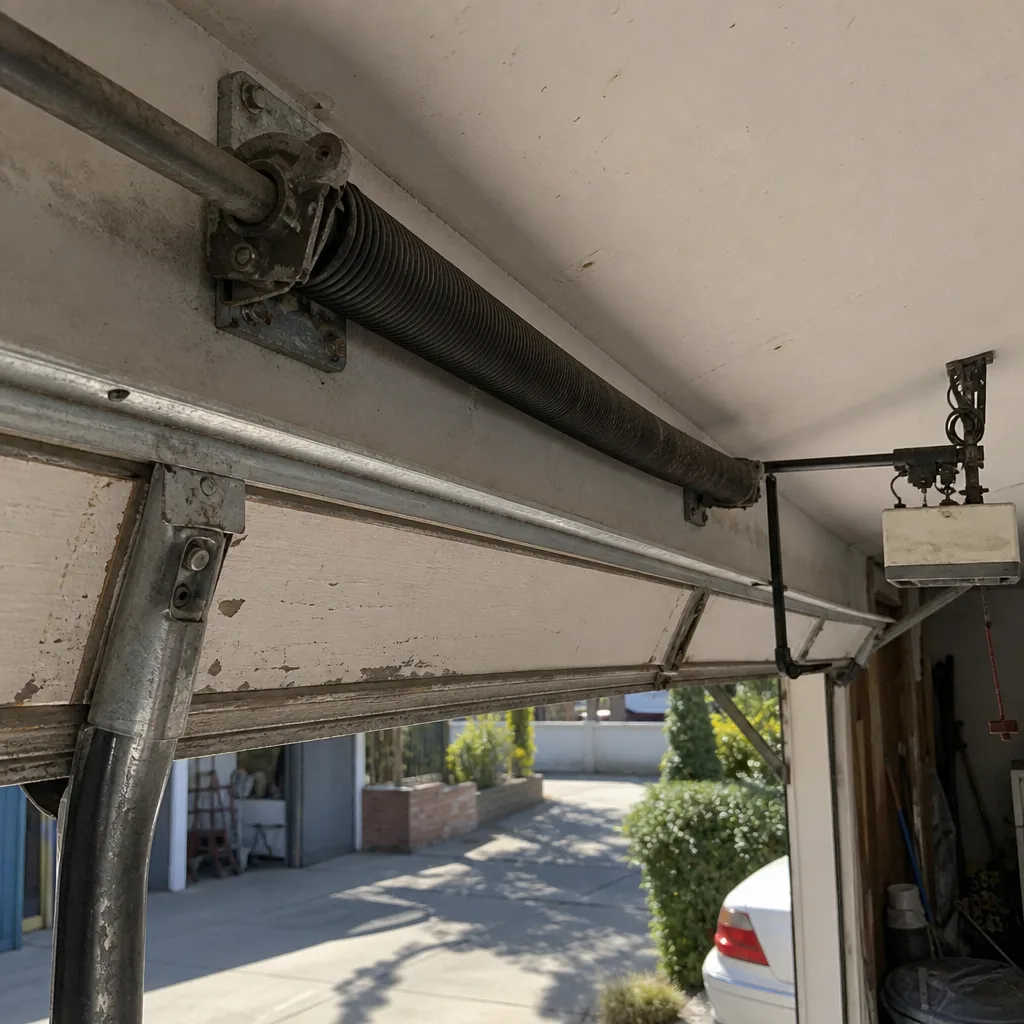 Before
 After
 Before
 After
 Before
 After