Last updated October 31, 2026
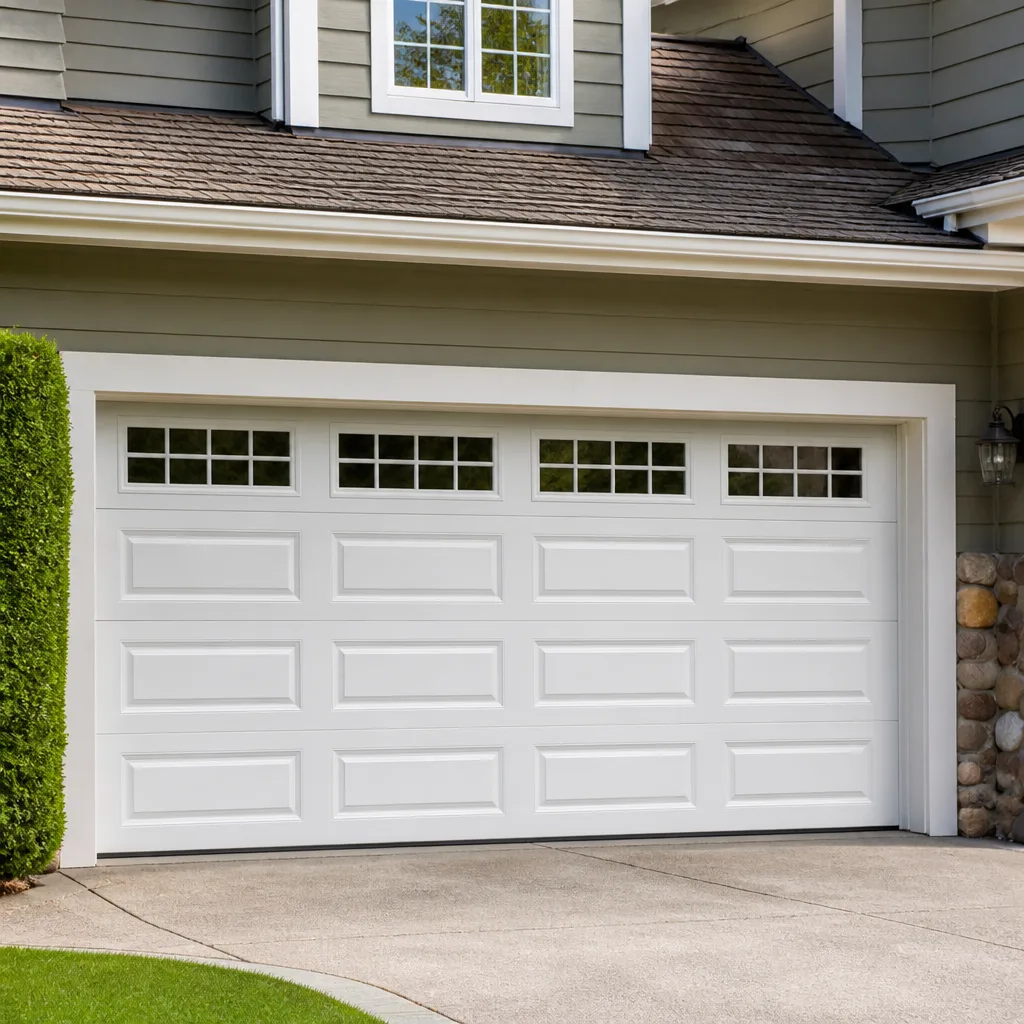 Raised-panel steel
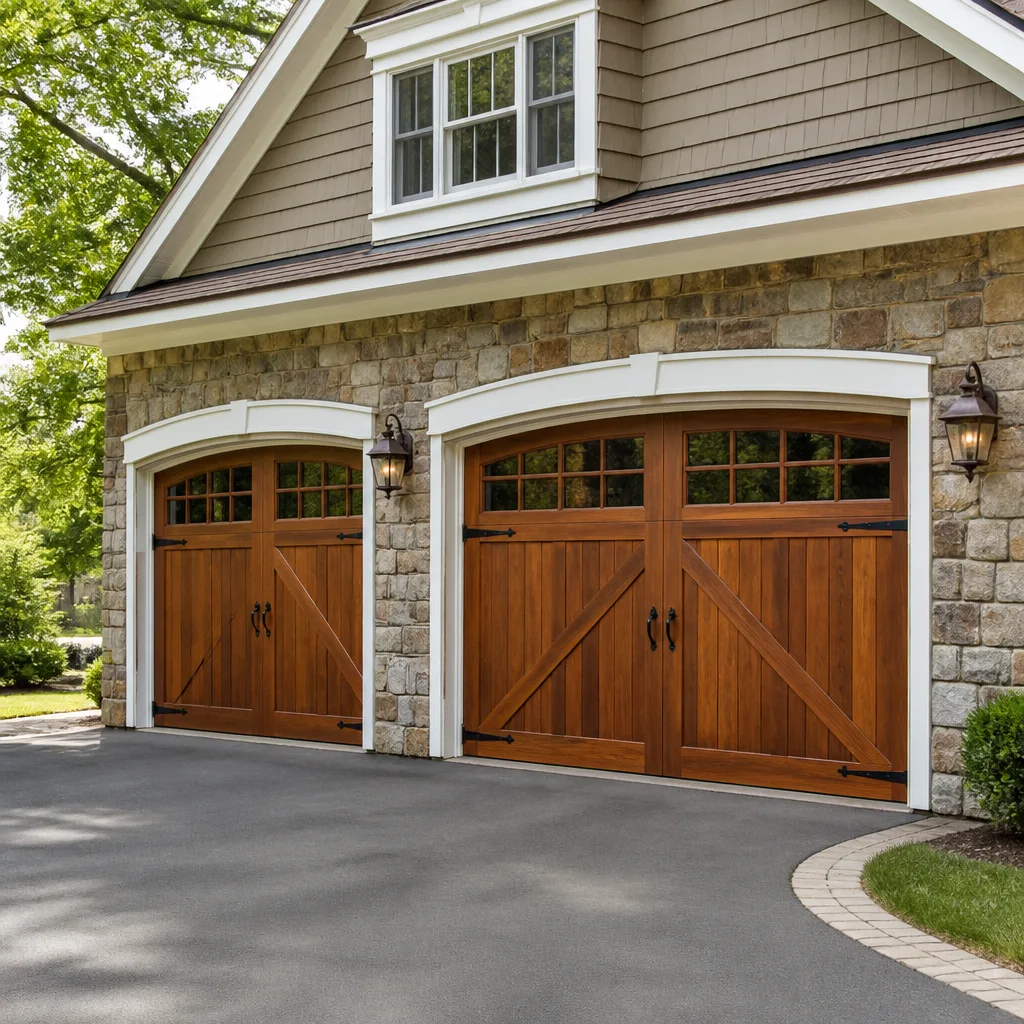 Carriage house
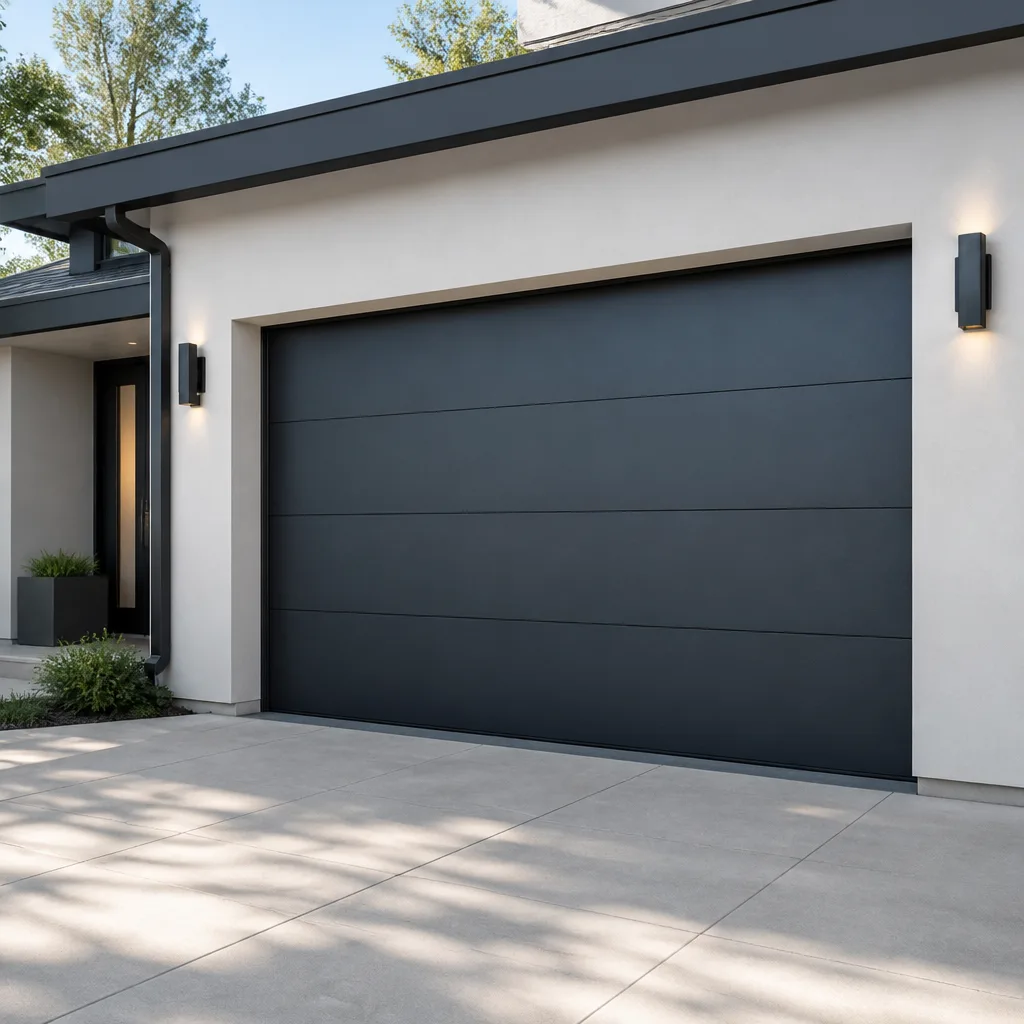 Modern flush
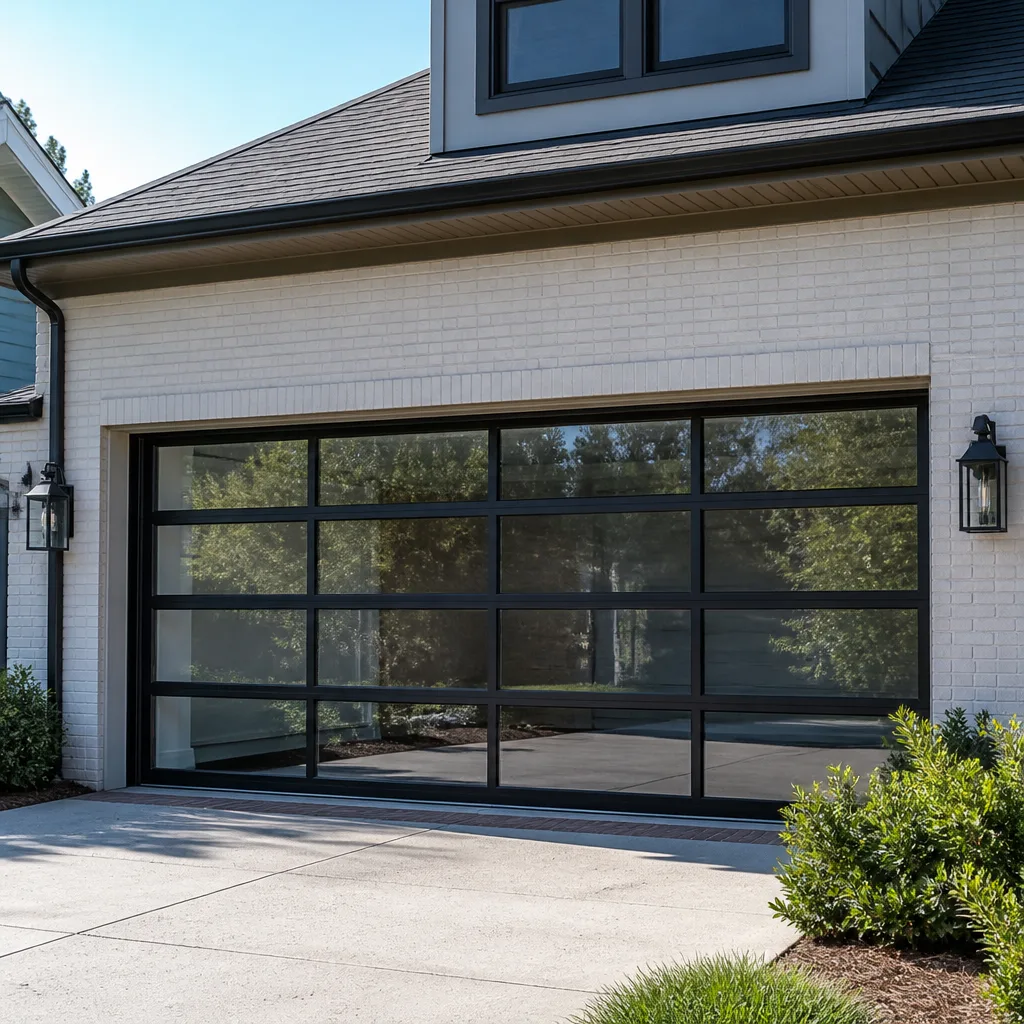 Full-view glass
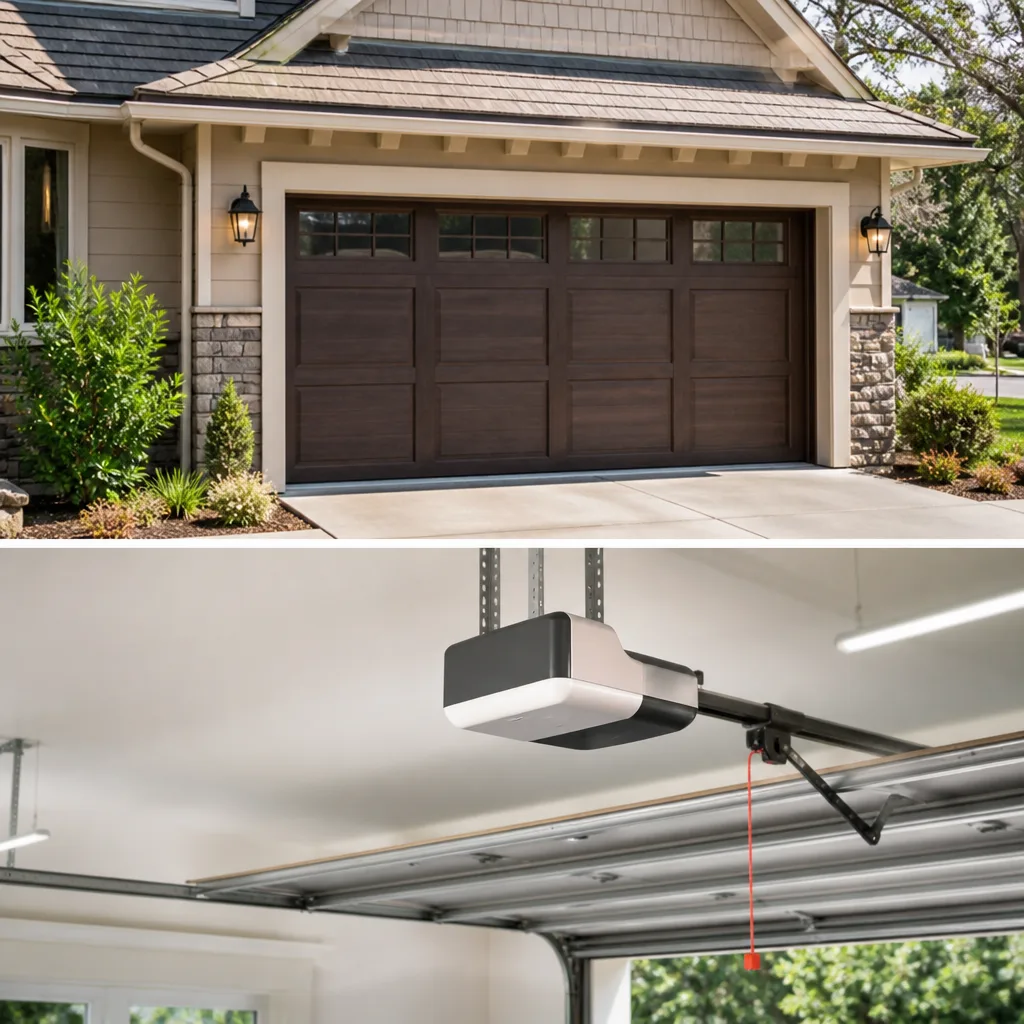 LiftMaster openers
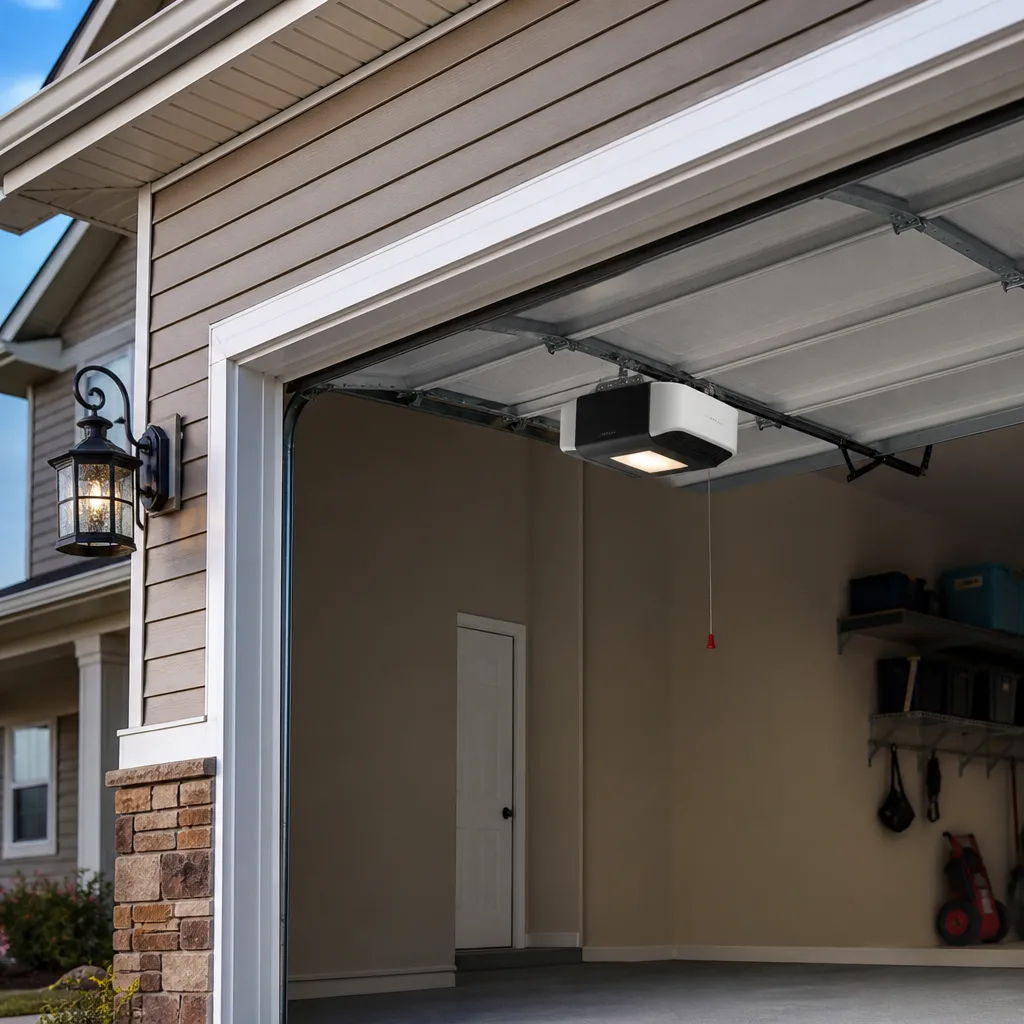 Chamberlain openers
Full 25-point door and opener safety check with every visit - springs, cables, rollers, tracks, and your LiftMaster or Chamberlain opener included
You get a price before we start. It does not change when the truck arrives.
Get your free estimateThe Complete Guide to Garage Door in West Hollywood
West Hollywood has more design review overlays per square mile than almost any city in Los Angeles County. A garage door replacement that would sail through permits in Burbank can trigger a full Board of Architectural Review hearing in WeHo. If you own a home here, your garage door isn’t just a moving wall – it’s a regulated architectural element, a security barrier, and in many pre-war bungalows, a structural puzzle that generic guides never address. This guide walks you through everything a West Hollywood homeowner needs to know: how the city’s design rules shape your options, why older rough openings complicate replacements, what hillside lots do to springs and cables, and how to get an honest diagnosis no matter what brand hangs on your tracks. We’ve written this from the ground up for West Hollywood specifically, not greater LA with the city name swapped in.
Quick Answer
A complete garage door guide for West Hollywood means understanding three things: the city’s Residential Design Guidelines restrict visible materials and panel styles on street-facing doors, many pre-1940s homes have non-standard rough openings that rule out off-the-shelf replacements, and hillside properties place unusual stress on springs and cable routing. For most West Hollywood homeowners, the practical path is a brand-agnostic specialist who can diagnose the existing system – door panel, tracks, springs, and opener – before recommending repair or replacement. Golden Bear Garage Door Repair provides exactly that, covering LiftMaster, Chamberlain, Clopay, and Amarr systems across door repair, opener repair, and full installation in West Hollywood.
Styles & brands we work with
Table of Contents
- How West Hollywood’s Design Guidelines Affect Your Garage Door
- Non-Standard Rough Openings in Pre-War West Hollywood Homes
- HOA vs. City Jurisdiction: Which Rules Govern Your Property
- Why Hillside Lots Create Unique Spring and Cable Challenges
- Which Door Systems Are Still in Use Across West Hollywood
- Repair vs. Replace: A Brand-Agnostic Approach That Saves Money
- Garage Door Opener Options for West Hollywood Homes
- What Garage Door Work Actually Costs in West Hollywood
How West Hollywood’s Design Guidelines Affect Your Garage Door
West Hollywood’s Residential Design Guidelines don’t exist to make your life difficult – they exist to preserve the city’s architectural character, which ranges from 1920s Spanish Colonial Revival bungalows to mid-century modern courtyard apartments. But they do constrain what you can install on any door visible from the street. The city’s zoning code and design review process classify garage doors as architectural features, not just functional components. That single distinction changes everything about your replacement options.
Here’s what the guidelines actually mean for a garage door project in West Hollywood:
- Material restrictions on street-facing doors: The design guidelines favor materials consistent with the home’s original architectural style. For a Spanish Colonial home near Norma Triangle, that might mean wood or wood-look steel in warm tones. For a mid-century house in the Hills of West Hollywood, clean horizontal lines in aluminum or flush steel panels fit the language better.
- Panel style and window placement: Ornate raised panels that would look fine on a craftsman in Pasadena can clash with the streamlined aesthetic WeHo’s design review board expects. Carriage-house styling, in particular, gets scrutiny – it works on some historic homes and looks forced on others.
- Hardware finish and visibility: Some design overlay areas restrict exposed hinges, handle placement, and metal finish colors. Matte black hardware might pass on one block and fail on the next depending on the specific sub-area’s guidelines.
- Color and reflectivity: High-gloss finishes and bright whites are often discouraged in favor of muted, low-reflectivity tones that recede into the facade.
Who enforces this? Not every garage door project triggers a full review. Smaller repairs – like spring replacement, panel section replacement, or opener swaps – fall under routine maintenance and move forward without design approval. A full door replacement on a street-facing garage, however, can require a design review application, and in some historic districts, a Board of Architectural Review hearing. We’ve helped homeowners in the West Hollywood West neighborhood determine whether their specific property requires review before they spend money on a door they can’t install.
Our advice: before you pick a replacement door, call the city’s planning counter with your address and ask whether your property sits in a design review overlay. That fifteen-minute call can save you a six-week delay. For a deeper look at how repair work differs from replacement, see our Garage Door Repair in Burbank guide – the repair-versus-replace logic applies to WeHo homes too.
Non-Standard Rough Openings in Pre-War West Hollywood Homes
West Hollywood’s housing stock skews old. A significant share of single-family homes and small apartment buildings in the flats were built between 1920 and 1945, before garage door manufacturers standardized opening sizes. That means many WeHo garages have rough openings that don’t match the 8×7, 9×7, or 16×7 dimensions that modern sectional doors are built around.
What does a non-standard opening mean in practice?
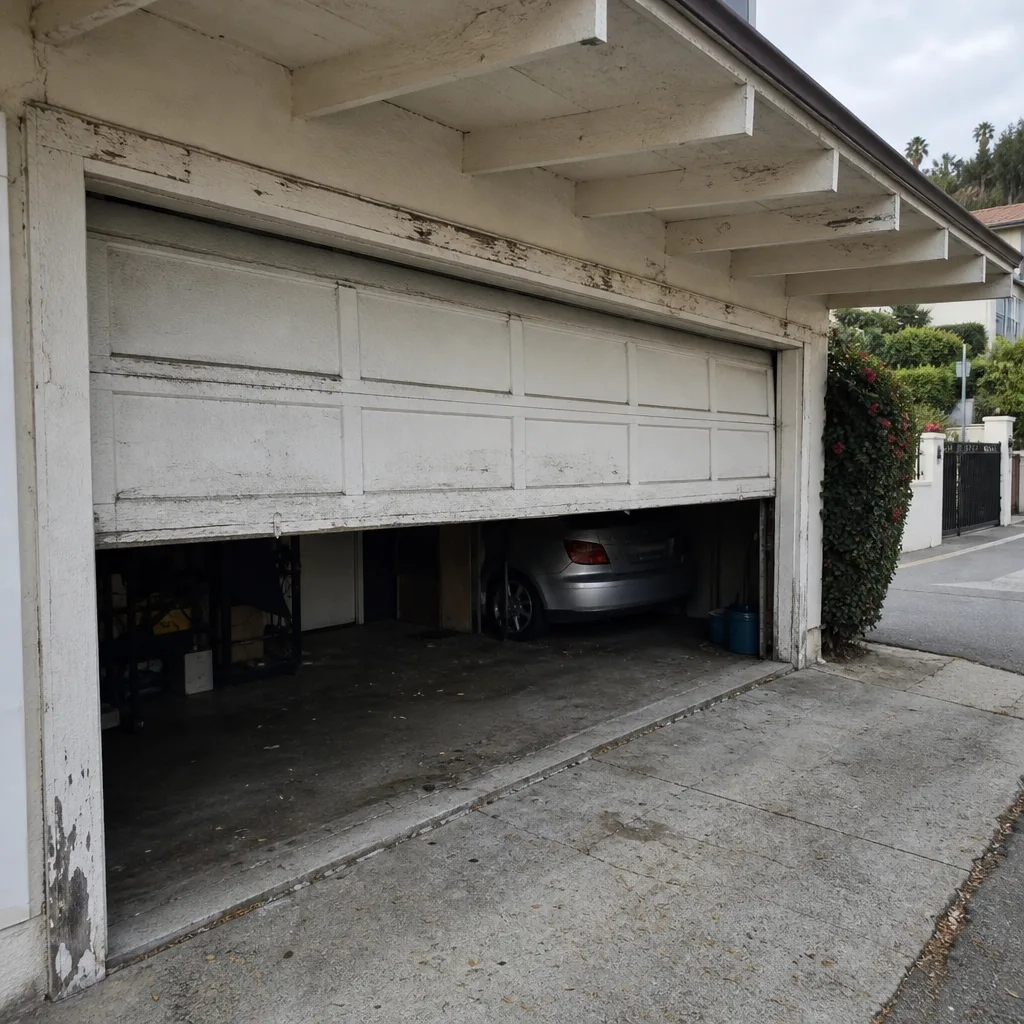
It means you can’t simply order a stock door from a catalog and have it fit. In our experience working on homes near Plummer Park and Spaulding Square, we regularly see rough openings that are 7’6″ wide instead of 8′, or 6’10” tall instead of 7′. Some garages built for a single car measure under 8 feet wide – well below the minimum for most off-the-shelf sectional doors.
Your options for a non-standard opening break down like this:
- Custom-sized sectional door: Most major manufacturers – including Clopay and Amarr – offer custom sizing, but lead times run 4 to 8 weeks and prices climb 20 to 40 percent over stock equivalents. This is the cleanest visual result and preserves the door’s proper balance.
- Track modification and panel trimming: A skilled technician can sometimes adjust track geometry or trim the bottom section of a stock door to fit a slightly short opening. This works when the mismatch is an inch or less.
- Roll-up door conversion: For very narrow openings, a rolling steel door that coils above the opening avoids the side track clearance issues that sectional doors need. These are more common in commercial settings but appear on some older West Hollywood residential garages.
- Reframe the opening: The most expensive option, but sometimes the right one if the existing framing is compromised or badly out of square. Many pre-war garages in WeHo have settled foundations, and the opening itself may not be level.
Here’s the thing most guides don’t tell you: a proper measurement involves more than width and height. Side clearance for tracks, headroom above the opening for the horizontal track run, and backroom depth for door travel all matter. A 9×7 door needs roughly 12 inches of headroom and at least 4 inches of side clearance for standard track. Homes in the R-1 zones south of Santa Monica Boulevard often have converted garages or tight setback configurations where these clearances are compromised.
If your garage was converted to living space decades ago and then partially converted back, or if your garage sits under the house with limited headroom, your replacement options narrow significantly. We measure every dimension before ordering anything – a wrong measurement in West Hollywood can turn a one-week replacement into a two-month custom order.
HOA vs. City Jurisdiction: Which Rules Govern Your Property
West Hollywood has a surprisingly high concentration of managed communities, courtyard buildings, and hillside HOAs relative to its 1.9 square miles. If your property falls under HOA governance, you have two rulebooks to satisfy – and they don’t always agree. Understanding the hierarchy saves time and money.
The basic hierarchy: City zoning and design review rules are law. HOA covenants, conditions, and restrictions (CC&Rs) are contract. You must comply with both, but they operate independently. The city won’t enforce your HOA’s rules, and your HOA won’t enforce city code. You need clearance from each.
How to figure out which applies to your garage door project:
- Check your deed or HOA documents first. CC&Rs typically specify whether garage doors require architectural committee approval. Most West Hollywood HOAs with shared garage structures or visible streetscape frontages require written approval before any door replacement.
- Determine if the city’s design review applies. Call West Hollywood’s current planning division (or check the city’s interactive zoning map) with your address. Street-facing garages in design overlay districts trigger city review; rear-facing or interior courtyard garages often don’t.
- Submit to the stricter standard when rules conflict. If your HOA mandates a specific door style that the city’s design guidelines discourage for your architectural sub-area, the city’s position usually prevails because it carries legal weight. An experienced contractor can help you present a door that satisfies both – often possible by choosing a manufacturer that offers custom panel configurations.
What happens if you skip this step? In a condominium or managed community near Kings Road or the Norma Triangle, installing a self-selected door without HOA approval can trigger a demand to remove it at your expense. The city can issue a code violation notice requiring reversal of unpermitted work. We’ve seen homeowners pay for the same door twice because they assumed one approval covered everything.
For homeowners in nearby Burbank facing similar HOA-versus-city questions, our Garage Door Installation in Burbank page covers that city’s process – the decision framework is similar.
Why Hillside Lots Create Unique Spring and Cable Challenges
The hillside homes above Sunset Boulevard – the streets that climb toward Laurel Canyon and the Bird Streets – present a garage door environment no flatland guide addresses. Sloped driveways, garages set into hillsides, and angled approaches change how your door’s mechanics behave over time.
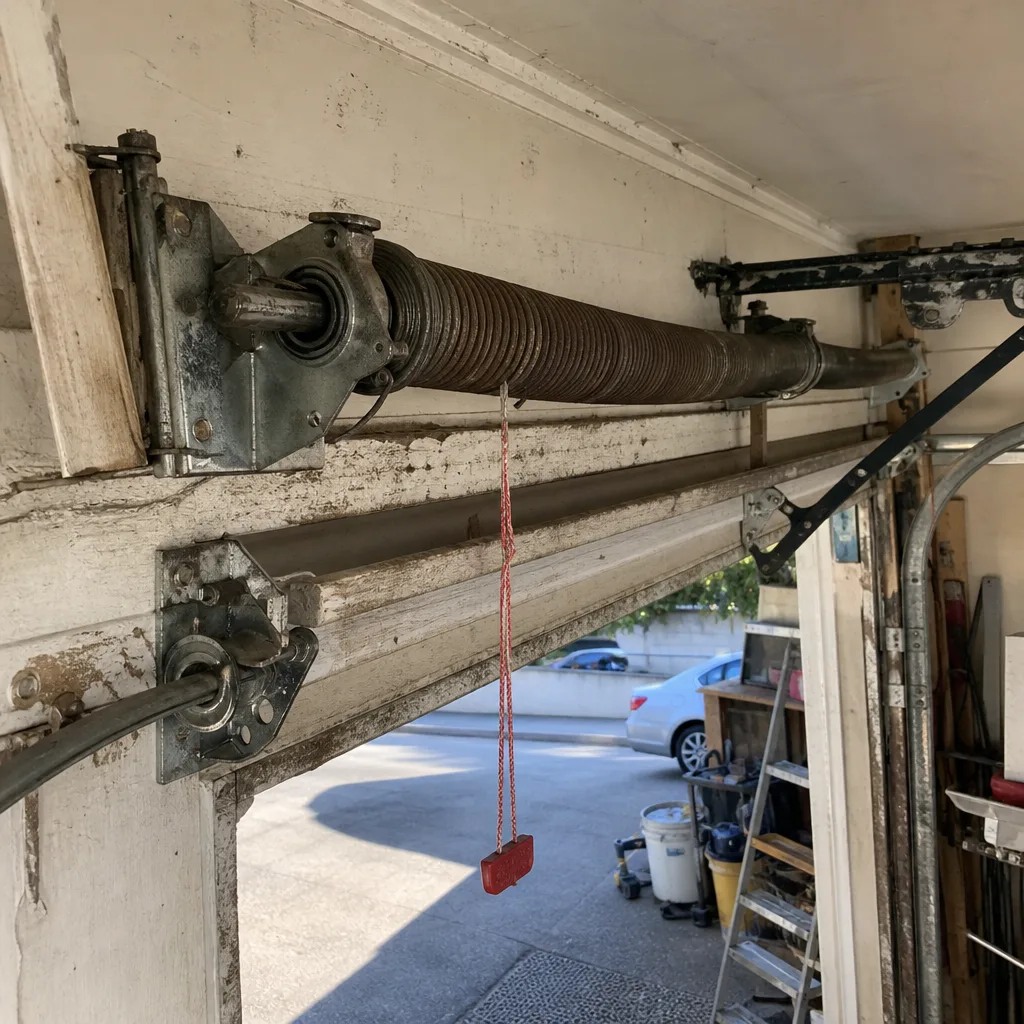
The physics problem: Garage door springs are calibrated to counterbalance the exact weight of the door panel. That calibration assumes the door travels along a level plane. When a garage sits on a slope, two things happen. First, the door’s weight distribution shifts as it travels, placing uneven load on the side cables. Second, the opener works against gravity differently on the downhill stroke than the uphill stroke. Over years, this uneven loading wears springs unevenly and causes cables to develop fatigue – especially at the crimped ends where failures typically occur.
What we see on WeHo hillside service calls:
- Shorter spring life: Torsion springs rated for 10,000 cycles may last 7,000 or fewer on a steeply sloped garage because the load isn’t uniform across the travel range. We replacement springs on hillside doors more frequently than on flatland doors of the same age.
- Cable wear at the drum: The lift cables winding onto the drums can develop fraying on one side only – the side bearing more load. A visual inspection that only checks the door’s face misses this. We inspect both drums and both cable runs on every hillside call.
- Track bracket loosening: Sloped garages often have settling issues, and the track brackets bolted into the wall can work loose over time. Loose brackets mean the door drifts off-center, which accelerates roller wear and can cause the door to jam mid-travel.
- Opener strain on the close cycle: Gravity-assisted closing on a downhill door means the opener’s close force setting sometimes needs adjustment. If forces are set too high for a flatland door, the same settings can cause premature gear wear on a hillside door.
What to do about it: If your home sits on a sloped lot in the Doheny Estates area or along the northern edge of the city, have your springs, cables, drums, and track brackets inspected at least once a year – more often if you hear grinding or popping sounds during operation. Small adjustments on a hillside door prevent spring failures that can send a door crashing down. For specific spring warning signs, our Garage Door Repair in Burbank guide details what to watch for.
Which Door Systems Are Still in Use Across West Hollywood
West Hollywood’s housing age diversity means we encounter three distinct door system types in active use. Knowing which one you have shapes every repair and replacement decision. Here’s the field breakdown from our service calls across the flats, the central neighborhoods, and the hills:
- Sectional steel doors (most common, 1980s to present): Typically 2-inch-thick insulated steel panels on a track system with torsion springs. Brands like Clopay and Amarr dominate this category in WeHo homes. These doors are standardized, parts are widely available, and repair costs are predictable. If your home has had a door replacement since the 1990s, it’s almost certainly sectional steel.
- Wood tilt-up doors (prevalent in 1920s – 40s bungalows): A single slab that swings up and back on jamb hardware, often original to the home. These doors are heavy – solid wood panels can weigh 150 to 300 pounds – and the hardware is obsolete by modern standards. We still service them because tearing them out contradicts the architectural preservation ethos of West Hollywood. Repair typically means rebuilding the hinge points, not replacing the door.
- Early roll-up doors (scattered, mostly 1940s – 60s): Rolling steel or aluminum doors that coil above the opening. Less common in residential WeHo than in apartment building utility rooms, but found on some hillside homes where headroom for sectional tracks was insufficient. These systems are durable but make a distinctive metal-rattle sound that some homeowners want gone for noise reasons alone.
Why this matters: Different systems have different failure modes. Tilt-up doors fail at the hinges and spring brackets. Sectional doors fail at the torsion springs, cables, and roller bearings. Roll-up doors fail at the coil spring mechanism. A technician who only knows sectional systems will misdiagnose your tilt-up door – and in West Hollywood, where tilt-up doors still appear regularly on pre-war properties, that’s a real risk. We work on all three.
Repair vs. Replace: A Brand-Agnostic Approach That Saves Money
Most garage door companies in Los Angeles default to replacement because selling a new door is more profitable than fixing the one you have. Golden Bear’s position is different. We repair first when repair makes sense, and we recommend replacement when it genuinely costs less over the door’s remaining life. Here’s the decision framework we actually use on service calls in West Hollywood:
Repair makes sense when:
- The door panels are structurally sound and mostly rust-free, and the failure is a spring, cable, roller, or track issue. Spring replacement costs a small fraction of door replacement and restores the door to proper function.
- The door is a historic wood tilt-up in a design-review-protected home where replacement would trigger city scrutiny. Repair preserves the door’s character and avoids review delays.
- The opener has failed but the door itself operates smoothly by hand. A Chamberlain or LiftMaster opener replacement is straightforward and far cheaper than changing out a good door.
Replacement makes sense when:
- The door has impact damage to multiple panels, and the manufacturer no longer produces that panel profile. Mismatched replacement panels look wrong and can violate HOA aesthetic rules.
- The door is a non-insulated builder-grade steel door on a garage adjacent to living space, and the homeowner wants better thermal performance. West Hollywood’s temperature swings are mild compared to the Valley, but insulation still matters for homes with attached garages.
- The existing door is beyond economic repair – typically when repair costs exceed 50 percent of a quality replacement installed.
This approach requires knowing multiple brands. We’re certified across LiftMaster, Chamberlain, Genie, Clopay, Amarr, Wayne Dalton, Craftsman, and Raynor systems. Whatever brand is on your door, we know it. That brand-level familiarity is what lets us diagnose a Genie opener logic board failure versus a motor failure, or identify whether a Clopay panel section can be ordered individually or requires a full door replacement. When a company pushes only one brand, the diagnosis bends toward whatever they stock. We don’t carry that bias.
For a deeper breakdown on repair-specific issues, start with our Garage Door Repair in Burbank page – the diagnostic logic transfers directly to West Hollywood homes.
Garage Door Opener Options for West Hollywood Homes
The garage door opener market has consolidated around a few major platforms, but West Hollywood’s housing mix means homeowners often have mismatched systems – a modern smart opener bolted to a 1970s wood door, or a 2003 chain-drive opener jerking a brand-new sectional door along its tracks.
The brands you’ll actually find in West Hollywood garages:
- LiftMaster: The professional-grade line from Chamberlain Group, sold through dealers and installers. LiftMaster dominates in newer homes and in buildings where a contractor specified quality equipment. Their DC-powered models are notably quiet – a real benefit in the dense courtyard buildings near Santa Monica Boulevard.
- Chamberlain: The retail counterpart to LiftMaster, commonly found in DIY-installed systems. Parts are abundant and inexpensive. Chamberlain’s smart-home integration through MyQ is genuinely useful for West Hollywood homeowners who want smartphone monitoring of garage access.
- Genie: Still common in homes built from the 1990s through the early 2010s. Genie openers are workable but have specific failure modes – particularly the circuit boards and the screw-drive carriage assemblies on older models.
What to consider before replacing an opener in West Hollywood:
- Noise. Before you choose: openers come in three drive types. Chain drives are cheapest and loudest – poor fits for attached garages where bedrooms sit adjacent. Belt drives use a reinforced rubber belt and are significantly quieter – the right choice for most West Hollywood homes with garage-adjacent living space. Screw drives fall somewhere in between but require more maintenance.
- Smart-home compatibility. If you use Apple HomeKit, Amazon Alexa, or Google Home, check compatibility before buying. MyQ (Chamberlain/LiftMaster’s platform) works broadly, but HomeKit integration sometimes requires an additional bridge device.
- Horsepower is mostly marketing above a certain point. A 1/2 HP opener handles most single and double doors in West Hollywood. A 3/4 HP unit makes sense for heavy wood tilt-up doors or doors over 10 feet tall. Anything beyond that is rarely necessary for residential use.
- Opener and door compatibility. If you replace an opener, the mounting rail, safety sensors, and force settings must match your existing door’s weight and travel. A opener mis-calibrated for a hillside door will chew through gears. See our Garage Door Opener Repair in Burbank guide for specifics on diagnosis versus replacement.
The honest opener recommendation: If your door is in good mechanical shape, replacing the opener alone is often the highest-value improvement you can make. A quiet belt-drive LiftMaster or Chamberlain unit genuinely changes the living experience in a compact West Hollywood home. One call covers both the electronic and mechanical systems – something many shops split into separate service visits.
What Garage Door Work Actually Costs in West Hollywood
Pricing transparency matters when you’re staring at a broken spring and a repair invoice. Here’s what garage door work typically costs in West Hollywood, based on the service patterns we see across the city’s neighborhoods. These are ranges, not quotes – your exact price depends on your door’s brand, size, weight, and access conditions.
Service call and diagnostic fee: $59 – $89 for a site visit covering diagnosis. If you proceed with a repair, most companies fold this fee into the repair cost.
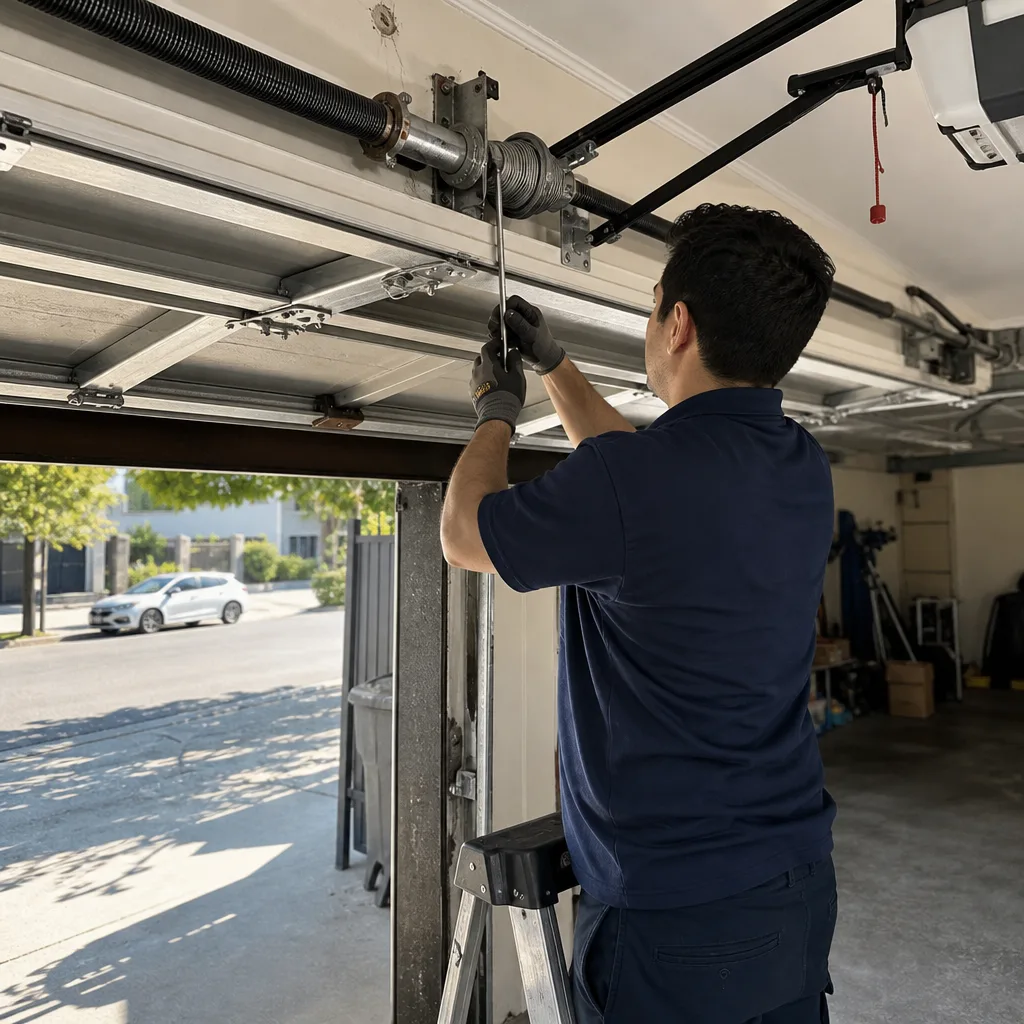
Spring replacement: $180 – $340 for a standard torsion spring replacement on a single sectional door, depending on spring cycle rating and door weight. Double springs run $280 – $480.
Cable replacement: $150 – $250 for a single cable replacement, including labor and adjustment. Worn cables should be replaced in pairs to maintain even tension.
Roller replacement: $90 – $200 for a full set of standard nylon rollers, including cleaning and lubrication of tracks.
Opener replacement (unit and installation): $380 – $750 depending on drive type and smart-home features. Belt-drive units cost more than chain-drive. We typically install belt-drive LiftMaster and Chamberlain units in West Hollywood homes because the noise difference justifies the price.
Full door replacement (sectional steel, installed): $1,200 – $4,500 depending on size, insulation level, window placement, and whether custom sizing is required for a non-standard opening. Custom-sized doors for pre-war WeHo garages push toward the upper end.
The unspoken rule: Every price is quoted and agreed before any work begins. The number we give you after looking at the door is the number on the invoice – no surprises, no add-ons mid-job. Any reputable company in West Hollywood operates this way, and if a contractor won’t give you a firm number upfront, get a second opinion.
Common Mistakes to Avoid
- Ordering a replacement door before checking design review status: In West Hollywood, a door bought without clearance can sit in a box while you wait for city approval. Verify your property’s overlay status before you pay for anything.
- Measuring only width and height: Side clearance, headroom, and backroom depth all determine whether a door fits. A 9×7 door needs roughly 12 inches of headroom. Homes in the flats often have less than that.
- Ignoring HOA rules until after installation: HOA removal demands are expensive. Check your CC&Rs before any visible garage door change on a street-facing elevation.
- Reusing old track with a new door: Tracks wear, bend, and fall out of alignment. A new door on old track wears cables unevenly and sounds terrible. Replace track components when the door is replaced.
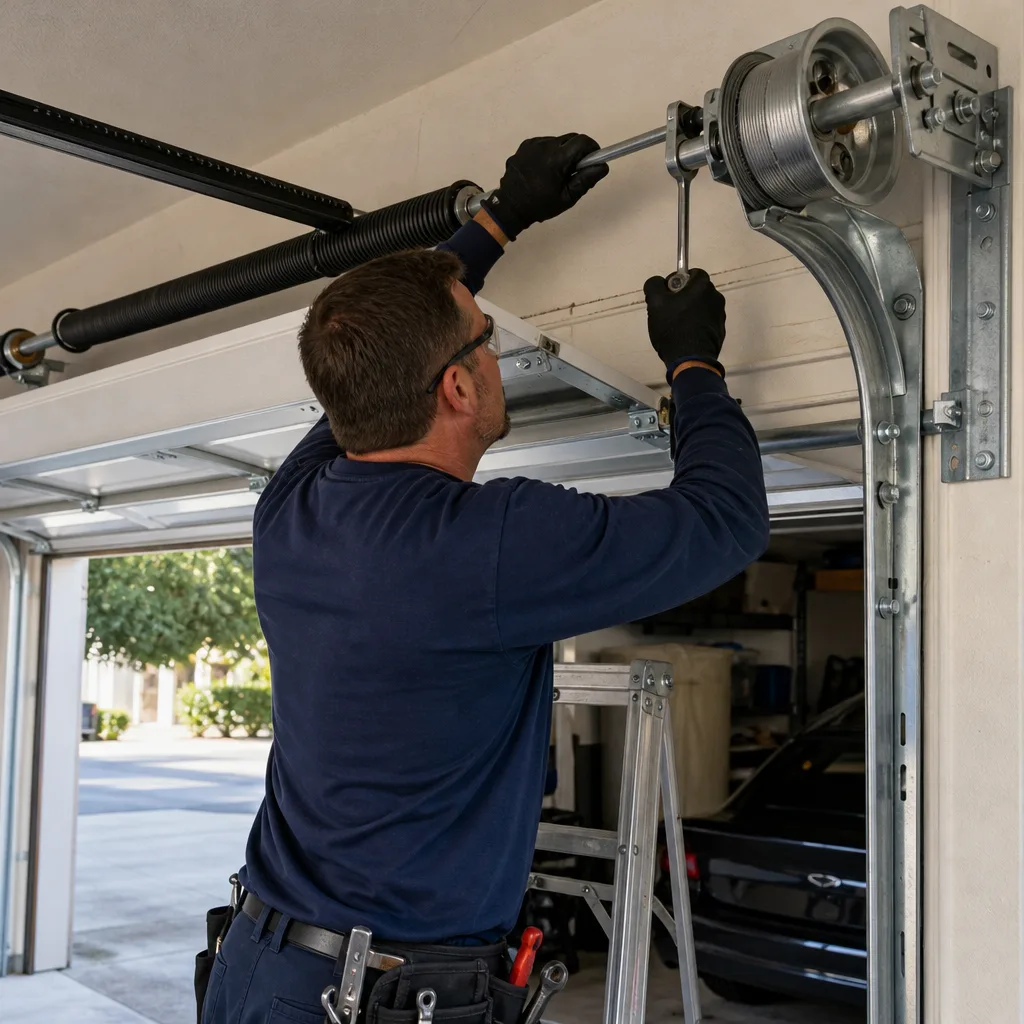
- Treating spring replacement as a DIY project: Torsion springs are under extreme tension and can cause serious injury or death when mishandled. This is not a weekend project. Call a trained professional.
- Choosing the cheapest door with the lowest cycle-rated springs: A door with 5,000-cycle springs costs less upfront but fails twice as fast as a 10,000-cycle setup. In hill-adjacent West Hollywood neighborhoods, spring life shortens further. Pay for higher-rated springs.
- Lubricating a garage door with WD-40: WD-40 is a solvent, not a lubricant. It strips existing grease and accelerates wear on rollers and hinges. Use white lithium grease on metal-to-metal contact points and silicone spray on the track.
See the difference
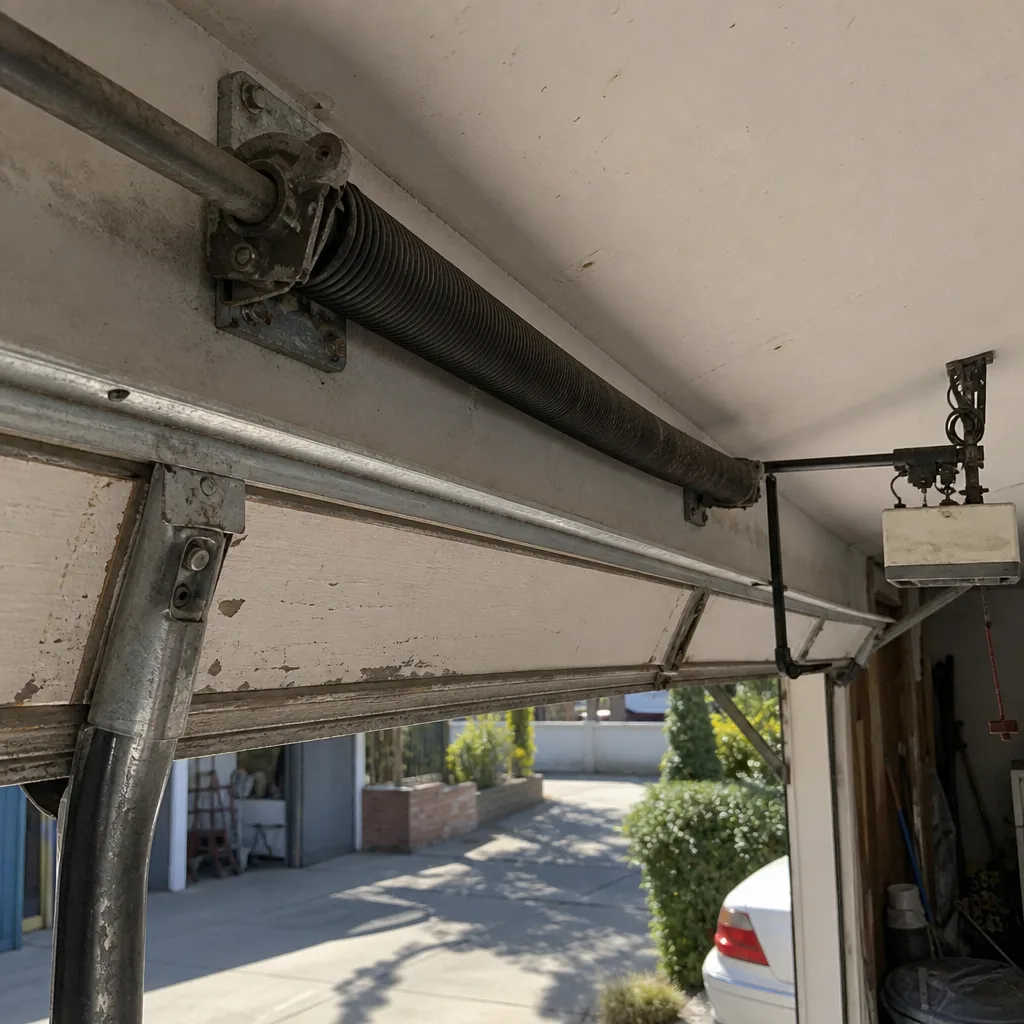 Before
 After
 Before
 After
 Before
 After
When to Call a Professional
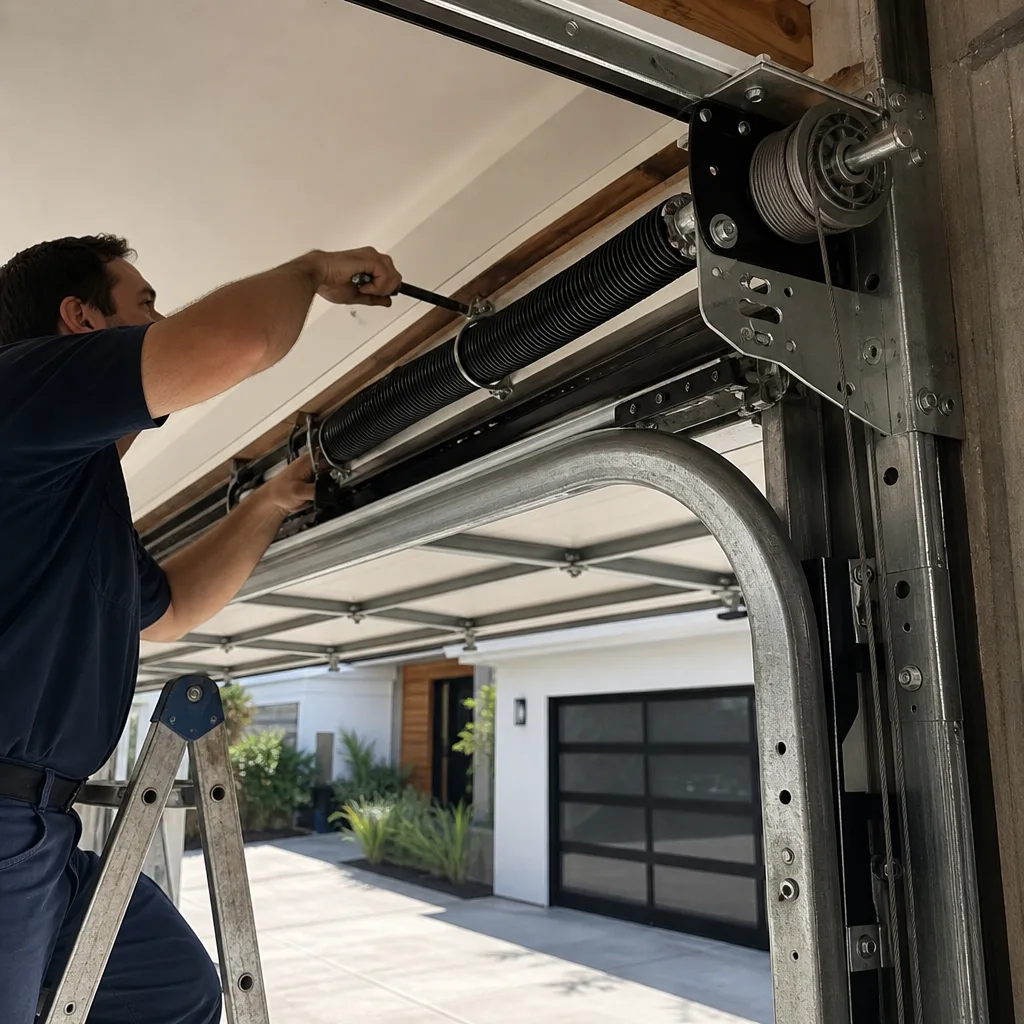
Call a garage door specialist when you see any of these: a spring has snapped loudly, the door hangs crooked or doesn’t travel evenly, cables appear frayed or detached from the drums, the opener runs but the door doesn’t move, or you hear grinding, popping, or metal-on-metal sounds during operation. These conditions indicate mechanical failures that get worse with use. Spring and cable work especially should never be attempted without training – the stored tension can release violently. If you’re in West Hollywood and need a diagnosis, Golden Bear Garage Door Repair offers free estimates in West Hollywood – call (833) 467-4118. Our team assesses the door, the opener, and the track system in one visit.
Frequently Asked Questions
Most West Hollywood garage door repairs fall between $150 and $500, with spring replacement at $180 – $340 and cable replacement at $150 – $250. A service call typically runs $59 – $89, folded into the repair if you proceed. Call (833) 467-4118 for an exact quote – estimates are free.
You need design review approval if your garage door faces the street and sits within a design review overlay district, not a building permit in the traditional sense. Interior or rear-facing garage doors typically don’t require review. Check with the city’s planning counter using your address before ordering a door.
Yes, in most cases. Opener repairs and replacements are same-day jobs when the unit is in stock and the door’s mechanics are compatible. Common Chamberlain and LiftMaster units are readily available. Call (833) 467-4118 to confirm availability for your specific model.
Yes, but it requires custom sizing. Clopay and Amarr both manufacture custom-sized sectional doors to fit non-standard West Hollywood rough openings, with lead times of 4 to 8 weeks. In some cases, track modification allows a stock door to fit a slightly short opening.
A belt-drive LiftMaster or Chamberlain opener offers the best balance of quiet operation and smart-home compatibility for most West Hollywood homes, especially those with bedrooms adjacent to the garage. Expect to pay $380 – $750 installed depending on features.
In most cases, yes. Our technicians stock common springs, cables, rollers, and circuit boards for LiftMaster, Chamberlain, Genie, Clopay, Amarr, and Wayne Dalton systems. For older or less common parts, we can typically source them within one to two business days. Call (833) 467-4118 and we’ll confirm before sending a truck.
The Bottom Line
West Hollywood’s garage doors live at the intersection of tight design regulation, aging housing stock, and hillside mechanics. What works in Burbank or Culver City doesn’t automatically work here. The right approach starts with understanding your property’s specific constraints: whether design review applies, whether your rough opening is standard, whether your HOA has anything to say about it, and whether your slope shortens component life. From there, a brand-agnostic diagnosis – repair before replace, parts matched to your existing system – saves money and preserves the architectural character that makes West Hollywood what it is. Golden Bear Garage Door Repair covers the full stack: door repair, opener repair, and complete installation across eight major brands. One call covers it all.
If you need help with a garage door in West Hollywood, call (833) 467-4118 for a free estimate. We’ll look at your door, your opener, and your track system – and give you an honest answer about what needs fixing and what can wait.
For residents in neighboring communities, see our service guides for Garage Door Opener Repair in Burbank and Garage Door Installation in Burbank. You can also return to the Golden Bear Garage Door Repair home page for an overview of everything we do.
Written by the team at Golden Bear Garage Door Repair, serving West Hollywood since 2016.