
Last updated October 31, 2026
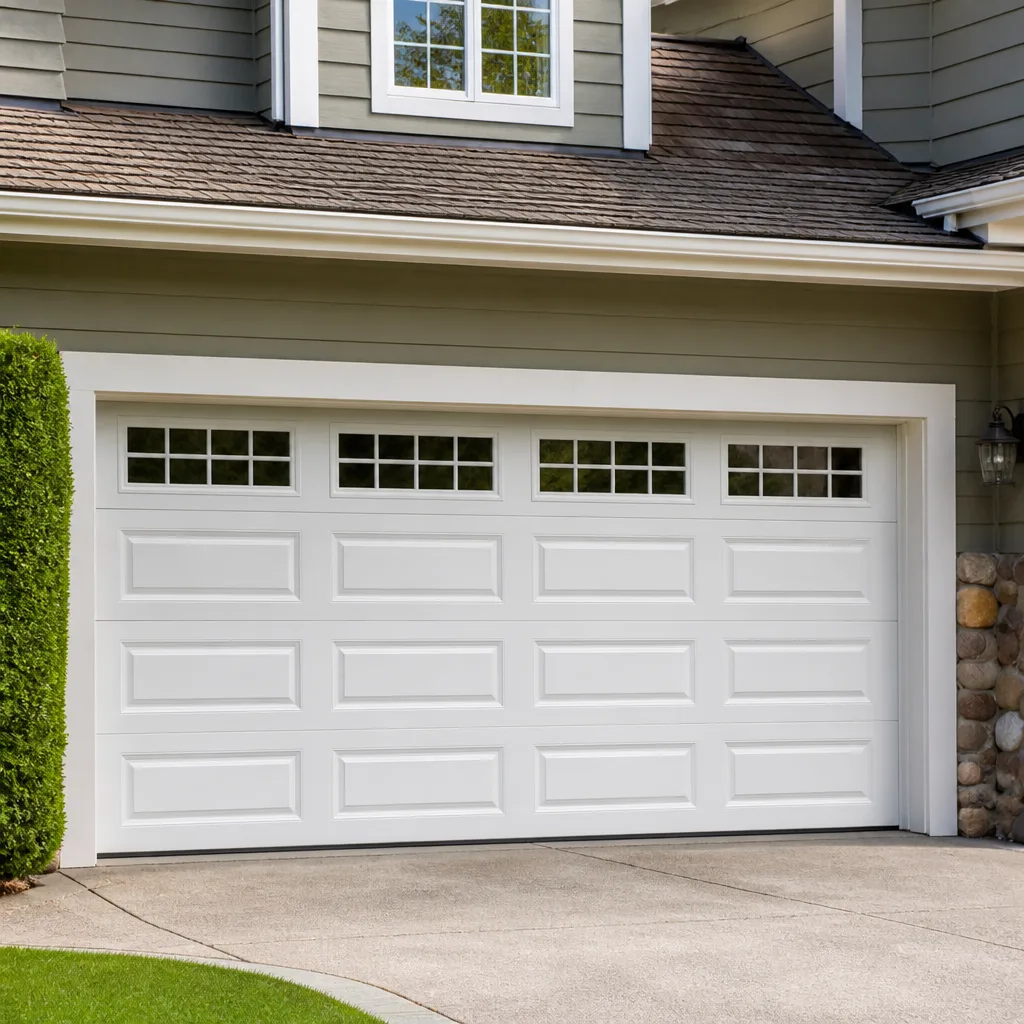 Raised-panel steel
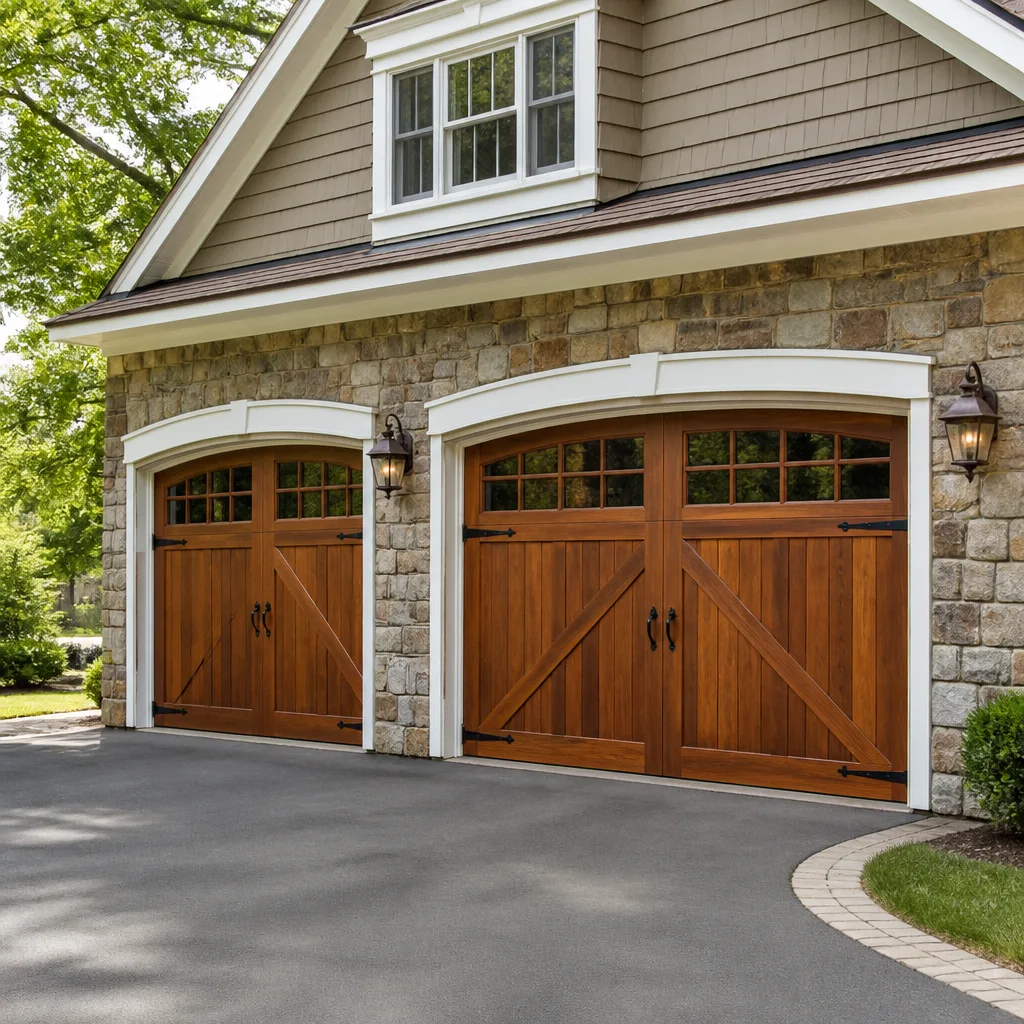 Carriage house
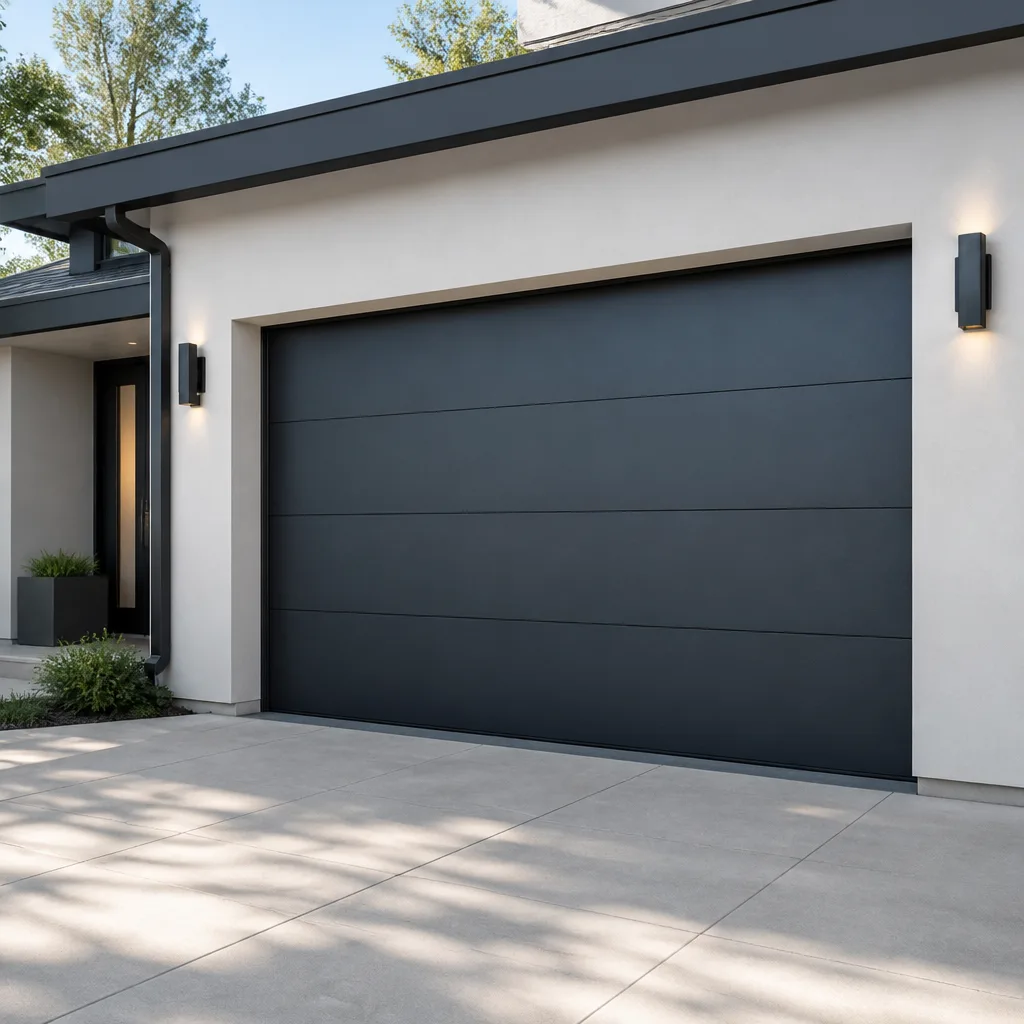 Modern flush
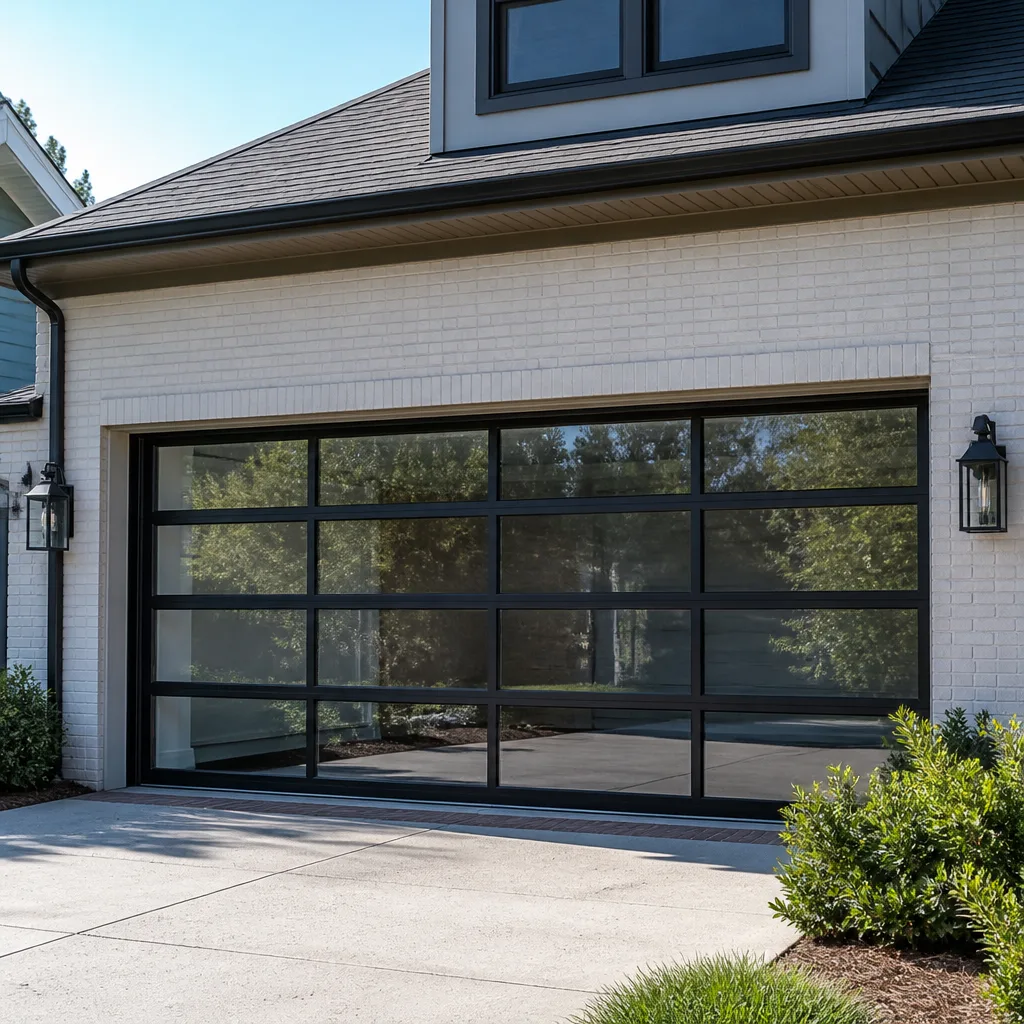 Full-view glass
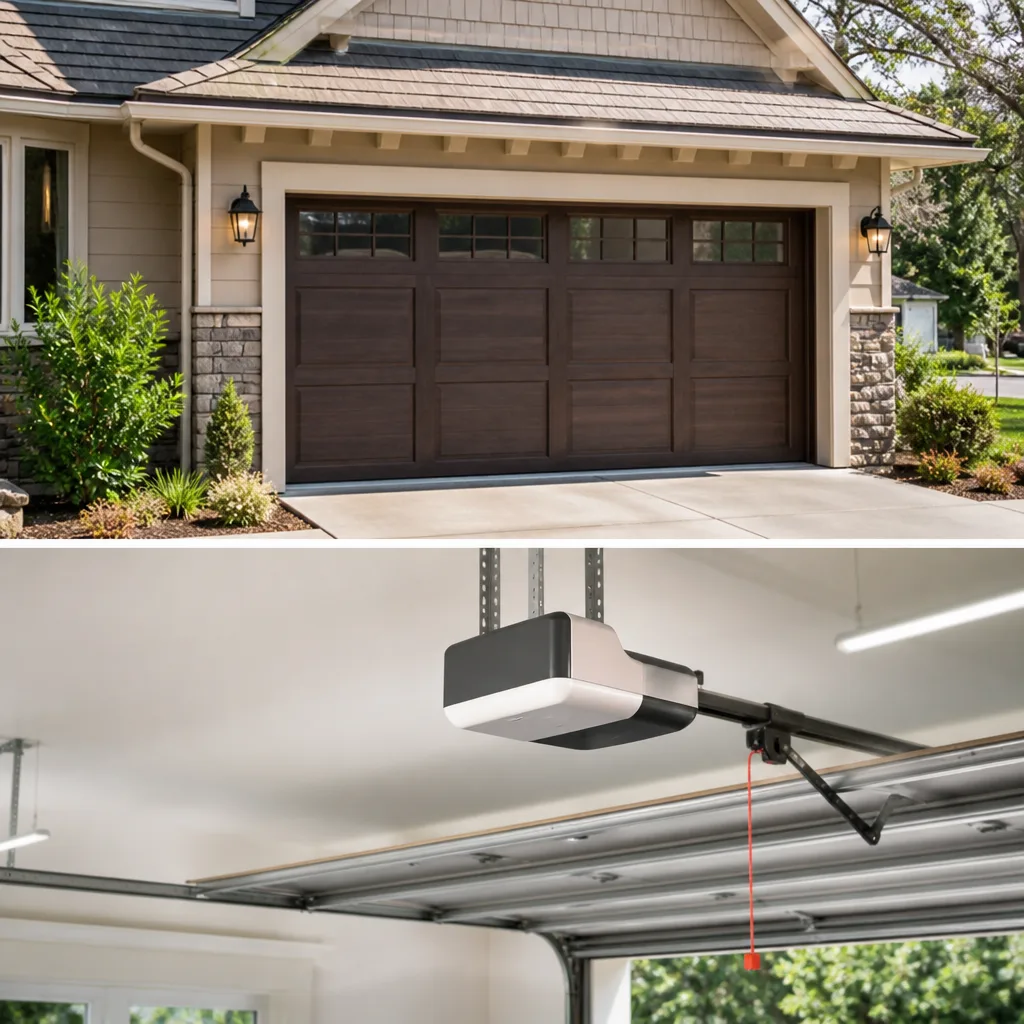 LiftMaster openers
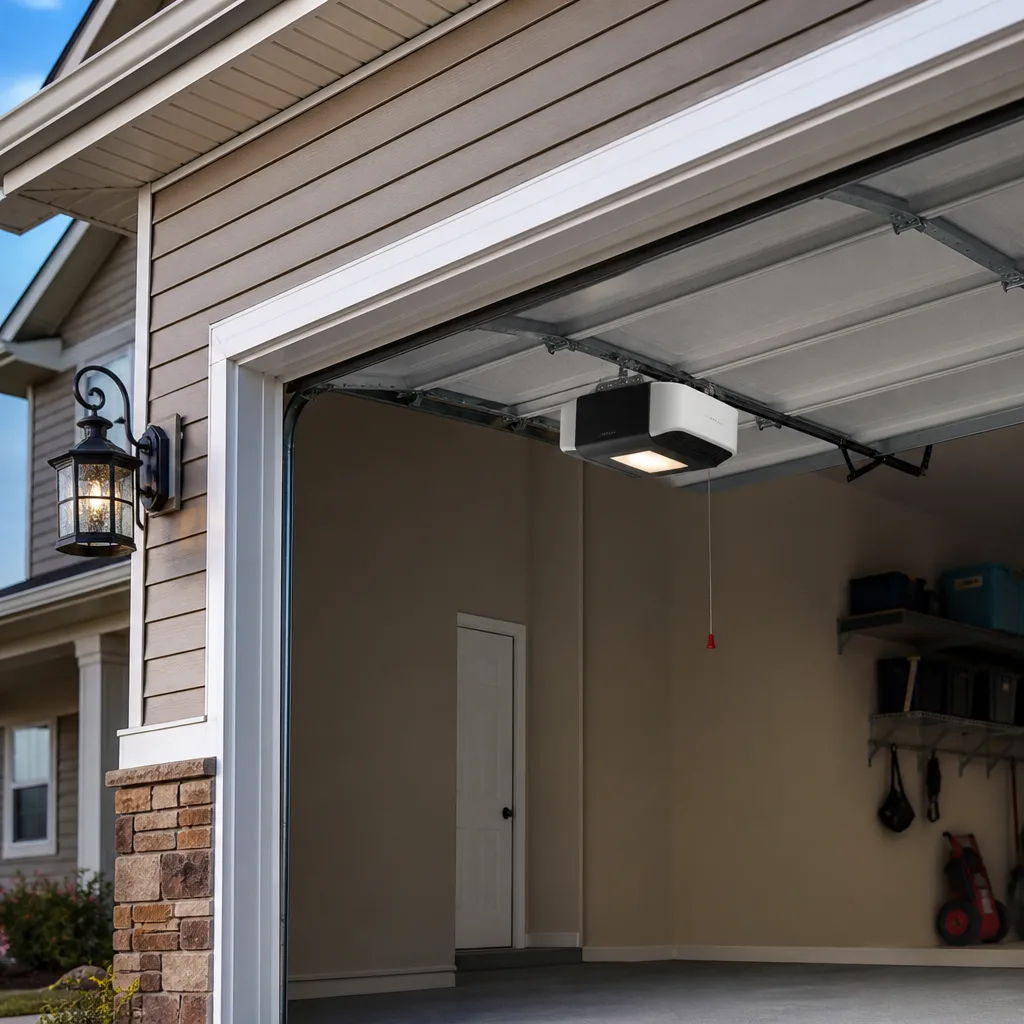 Chamberlain openers
Full 25-point door and opener safety check with every visit - springs, cables, rollers, tracks, and your LiftMaster or Chamberlain opener included
You get a price before we start. It does not change when the truck arrives.
Get your free estimateDIY vs Professional Garage Door: The West Hollywood Homeowner’s Decision Guide
Most garage door guides treat every repair like a binary choice: either you’re a weekend warrior who tackles everything with a socket set, or you’re someone who calls a technician to change a lightbulb. That framing is wrong, and in West Hollywood it can actually get you hurt. The real question isn’t whether you’re “handy.” It’s whether the specific task in front of you carries injury risk, voids a manufacturer warranty, or triggers a city permit. This guide draws that line task by task. We’ll tell you exactly which jobs you can safely do this Saturday, which ones you should think twice about, and which ones belong in the hands of someone who works with torsion springs every week. Because honestly, some of this stuff can kill you, and most of it depends on the details.
Quick context before we go further: we’re Golden Bear Garage Door Repair home, and we’ve worked on garage doors all over West Hollywood, from the hillside homes off Doheny to the condo complexes near Santa Monica Boulevard. The advice below isn’t theoretical. It’s what we’d tell a neighbor over coffee.
Quick Answer
If your garage door has a broken torsion spring, a snapped cable, or a bent track, call a professional. The mechanical energy stored in a loaded torsion spring can cause permanent injury in less than half a second, and these are the components most likely to fail catastrophically. But you can absolutely handle several maintenance tasks yourself: lubrication, weather seal replacement, sensor alignment, and reprogramming a LiftMaster or Chamberlain opener are all legitimate DIY work in West Hollywood, provided you use the right materials and follow the manufacturer’s instructions. The line to draw is simple: if the part stores mechanical tension, don’t touch it. If the part just wears out over time and can be swapped with basic hand tools, it’s probably fine.
Styles & brands we work with
Table of Contents
- Task-by-Task Breakdown: What You Can and Can’t Safely Do
- Why Torsion Springs Are the Line You Don’t Cross
- DIY Repairs That Void Your Opener Warranty
- West Hollywood Permits: The Legal Side of DIY Installation
- The Three Tools Every West Hollywood Homeowner Should Own
- Step-by-Step: Safe DIY Maintenance for Any Garage Door
- Liability: What Happens If Someone Gets Hurt After a DIY Repair
- Common Mistakes to Avoid
- When to Call a Professional
Task-by-Task Breakdown: What You Can and Can’t Safely Do
We’ve organized the most common garage door tasks into three categories: safe for DIY, DIY with caution, and professional only. Each category is based on the same criteria: mechanical risk, warranty implications, and whether a mistake can cause property damage or injury. In our experience working across West Hollywood, where many homes have older single-car garages and original hardware from the 1980s and 1990s, homeowners who follow this breakdown rarely get into trouble.
Safe for DIY
- Lubricating rollers, hinges, and springs. This is the single best maintenance task you can do, and it’s completely safe. Use a silicone-based or lithium-based spray, not WD-40, which attracts dirt and dries out. Spray the rollers, the hinges, and the spring while the door is closed. Open and close the door twice to distribute the lubricant.
- Replacing the bottom weather seal. The rubber strip at the bottom of the door rots, especially in warm, dry climates like West Hollywood’s summer heat. Pull out the old one, slide in a new one. Takes fifteen minutes, costs under $20.
- Cleaning and realigning photo-eye sensors. If your opener’s safety sensors get bumped, your door will refuse to close. Clean the lenses with a soft cloth, loosen the sensor mount, and adjust until both LED lights are solid. This is a five-minute job.
- Reprogramming a LiftMaster or Chamberlain keypad. Press the learn button on the opener, enter a four-digit code on the keypad, press enter, done. Manufacturers design this to be homeowner-accessible.
- Tightening loose bolts and brackets. Use a socket wrench and go around the door’s track brackets, hinges, and lag screws. Vibration loosens hardware over time, especially on heavy doors in earthquake-prone California.
DIY with Caution
- Replacing a broken hinge or roller. This requires removing bolts under tension from the door’s weight. If the door is partially open and you remove the wrong hinge, the door can shift. It’s doable, but you need to brace the door and work carefully. If you’re not sure how to brace a sectional door, call someone.
- Adjusting travel and force settings on an opener. LiftMaster, Genie, and Chamberlain openers have adjustment screws that control how far the door travels and how much force it uses. If you set the force wrong, you can prevent the safety reversal system from working, which is a serious safety hazard. Follow the manual exactly.
- Replacing opener remote batteries and reprogramming remotes. Simple, but you can lock yourself out of the system if you don’t follow the learn button sequence in order. Read the manual first.
Professional Only
- Torsion spring replacement or adjustment. This is the big one. A torsion spring is wound tightly enough to lift a 300-pound door. When it snaps or unwinds incorrectly, the spring can shatter bones, cause blindness, or sever fingers. Never, ever touch a torsion spring without proper training and winding bars. This is not a “watch a YouTube video” situation.
- Cable replacement. The two cables that run along either side of the door are under equal tension to the torsion spring. If one snaps while you’re working, the other cable whips across the door opening. Serious laceration risk.
- Track replacement or major adjustment. Bent tracks need to be removed, reformed, or replaced, and the door has to be realigned to within a few millimeters. If the track is wrong, the door can jump off and fall on someone or something.
- Panel replacement on a torsion spring system. Even though panels themselves are not dangerous, replacing one requires you to remove the torsion spring tension first. That’s a pro job by default.
- Opener motor replacement or gear replacement. You can replace an entire opener as a homeowner with patience, but internal motor or gear repairs require opening a sealed unit and dealing with electrical components. Warranty also usually requires professional installation for repair work.
For homeowners in West Hollywood, one more factor worth mentioning: many garages here are in older buildings with wood framing, and some doors were installed before current safety standards were written. That means the hardware may be fatigued in ways that aren’t visible. A door that’s been sagging for ten years is a door that deserves a professional inspection before you start pulling pins and loosening bolts.
Why Torsion Springs Are the Line You Don’t Cross
A torsion spring isn’t just a part. It’s a mechanical battery. When your garage door is closed, that spring is wound to a high tension state, storing enough kinetic energy to lift a door that weighs anywhere from 150 to over 300 pounds. If that energy releases the wrong way, it releases all at once. The steel bar that holds the spring can spin uncontrollably at high speed. A person’s hand, wrist, or face in the wrong position at the wrong moment can be permanently damaged before you even register what’s happening.
We’re not saying this to scare you into calling us for every little thing. We’re saying it because in West Hollywood, where many older homes have original doors from the 1970s with aging springs, the risk is real and the stakes are lifelong. The emergency room visits we’ve heard about follow the same story: the homeowner finds a YouTube tutorial, buys a set of winding bars for $35, and gets the spring halfway tight when the bar slips. That’s when the injury happens. Not during the grinding work, but during the instant the tension shifts sideways.
If your spring breaks, the door won’t open with the opener. You’ll hear a loud bang, like a gunshot, from inside the garage. One spring usually breaks first, and the door will still work manually if you disconnect the opener and lift with both hands. If two springs break, the door won’t lift at all. In either case, the repair is not a DIY job. A new torsion spring has to be wound to the exact door weight and drum configuration, and that winding has to be done with the correct bars, one quarter turn at a time, on both sides. Get it wrong and the door is unbalanced; an unbalanced door will wear out the opener premature, chew through cables, and eventually jump off the track.
DIY Repairs That Void Your Opener Warranty
This is where things get quietly expensive. You might save $200 on a spring replacement by doing it yourself, only to find that your $350 LiftMaster opener warranty is now null and void. Manufacturers are specific about what constitutes unauthorized service, and it’s worth reading the warranty card before you turn a single wrench.
LiftMaster and Chamberlain, which are the two most common smart-opener brands we see in West Hollywood garages, both state in their warranty documentation that the warranty is void if the opener is “damaged due to misuse, abuse, improper installation, or unauthorized repair.” The key phrase is unauthorized repair. If you open the motor housing and replace a gear yourself, and then later file a warranty claim for a separate issue, the manufacturer can reject that claim because you performed an unauthorized repair on the unit. Even if the failures are unrelated.
Genie uses similar language. Their warranty excludes “parts failures due to normal wear, improper installation, lack of proper maintenance, or use of unauthorized replacement parts.” That last clause is important. If you install an aftermarket belt or gear that Genie doesn’t approve, your warranty is gone. And if the opener is more than five years old, the warranty may already be expired anyway, which is when many West Hollywood homeowners decide to try a DIY repair in the first place.
What can you do without voiding your warranty? Plenty:
- Regular lubrication of the opener rail. LiftMaster explicitly recommends lubricating the chain or belt rail every six months. That’s a homeowner task.
- Replacing remote controls and keypads. These are designed as user-replaceable accessories. You can buy new ones and program them yourself.
- Cleaning and aligning photo-eye sensors. This is listed as a homeowner maintenance item in every major opener manual.
- Replacing the opener light bulb. Yes, some people think this requires a technician. It doesn’t. Use a rough-service bulb designed for garage door openers to handle vibration.
- Adjusting the force and travel settings. Technically this is the homeowner’s responsibility, but you have to follow the manual precisely. If you set the force too high, the opener won’t reverse when it hits an obstacle, which defeats the primary safety feature of the system.
What voids the warranty? Internal gear replacement, motor repair, logic board replacement, and any work on the drive sprocket or belt system. If the problem is inside the housing and you’re not sure what you’re looking at, call a professional or at least a dealer who can perform warranty-covered service. In West Hollywood, where space is tight and many garages are used as workshops or studios, an opener that’s been opened and resealed poorly can also fail again faster.
West Hollywood Permits: The Legal Side of DIY Installation
This is the part most DIY guides skip entirely. Before you start, read our Garage Door Permits, Codes & Inspections in CA: What You Need to Know. West Hollywood, like most cities in Los Angeles County, requires a building permit for a full garage door replacement in certain circumstances. The city’s building code is based on the California Building Standards Code, which means that if you’re changing the structural opening, installing a fire-rated door, or replacing a door in a multifamily building, you need permits and inspections.
Here’s the breakdown for West Hollywood specifically:
- Single-family homes: Replacing a garage door with a door of the same size, same weight, and same wind rating often does not require a permit if it’s a like-for-like swap. But if you’re widening the opening, changing from a swing door to a sectional door, or altering the header, you need a building permit.
- Multifamily buildings (condos, apartments): In West Hollywood, many residents live in condominium complexes along Fountain Avenue, La Cienega Boulevard, and the side streets off Santa Monica Boulevard. In these buildings, a garage door replacement usually requires HOA approval first, and the HOA will often require a permit and licensed contractor. A DIY installation in a condo parking structure without HOA approval can result in fines and a forced reversal.
- Fire-rated doors: If your garage is attached to a dwelling unit, California building code requires the door between the garage and the living space to be fire-rated. Replacing that door with a non-rated door is a code violation that can void your homeowner’s insurance. This is a common mistake we see when homeowners renovate in West Hollywood’s older bungalow courts.
- Electrical work: Installing a new garage door opener means adding an electrical outlet to the ceiling near the opener motor. California electrical code requires a permit for new circuit installation. Many DIY installs skip this step, which means the outlet is unpermitted and could be flagged during a future home sale inspection.
The practical takeaway: if you’re doing a like-for-like door replacement in a single-family home, you can probably do it yourself legally, assuming you have the physical strength and patience to handle a 150-to-300 pound door. But if you’re in a multifamily building, changing the opening size, or adding a new opener circuit, the permit and approval process makes DIY installation legally problematic, even if you know exactly how to do the work. In those cases, a licensed professional who handles the permits for you is the better call.
The Three Tools Every West Hollywood Homeowner Should Own
You don’t need a spring winding kit. In fact, we’d prefer you didn’t own one, because owning one creates the temptation to use it. What you do need are three simple tools that cover 90% of legitimate DIY garage door maintenance. Each costs under $25 and takes up less space than a shoebox.
- A can of silicone-based or white lithium spray lubricant. Not WD-40. Not cooking spray. A proper garage door lubricant. Spray the hinges, rollers, spring, and opener rail every six months. This is the highest-impact, lowest-risk maintenance task there is. A door that’s been properly lubricated will operate quieter, put less strain on the opener, and extend the life of the springs and cables by years.
- A socket wrench set with 3/8-inch and 7/16-inch sockets. These two sizes cover the vast majority of bolts on a residential garage door. Use the socket wrench to tighten lag screws on the track brackets, hinge bolts, and opener hardware. Loose hardware is one of the most common problems we see in West Hollywood garages, especially in older buildings where doors have been vibrating for decades.
- A four-foot level. Use it to check whether your door is balanced. Close the door, place the level against the bottom panel, and check it’s sitting evenly. An unbalanced door won’t sit level, which tells you there’s a spring tension problem that needs professional attention. You can also use the level to check that the tracks are plumb. If the tracks are leaning inward or outward, the door will bind.
That’s it. You don’t need a drill, you don’t need a torque wrench, and you definitely don’t need a spring winding kit. If a job requires more than these three tools, it’s probably a job for a professional.
Step-by-Step: Safe DIY Maintenance for Any Garage Door
This is the maintenance routine we recommend for every homeowner in West Hollywood, whether you have a modern Clopay door or an original wooden door from 1975. Total time: about 45 minutes, twice a year. Do it in the spring and fall, before the summer heat and before the winter rains.
- Disconnect the opener. Pull the red emergency release cord. This disengages the door from the opener so you can move it manually. If the door doesn’t move freely when disconnected, there’s a tension or track problem that needs professional attention.
- Check the balance. With the opener disconnected, manually lift the door to waist height and let go. It should stay in place. If it falls, the springs are not balanced and need adjustment. If it rises, the springs are over-wound. Both situations require a pro. Do not attempt to adjust springs yourself.
- Lubricate all moving parts. With the door closed, spray lubricant on the rollers, hinges, spring, and opener rail. Open and close the door manually twice to work the lubricant into the moving parts. Wipe off any excess with a rag.
- Check the weather seal. Look at the rubber strip on the bottom of the door. If it’s cracked, brittle, or has gaps, replace it. A failed weather seal lets dust, rain, and pests into your garage. In West Hollywood’s dry climate, rubber degrades quickly in the heat.
- Test the safety reversal. Re-engage the opener by pulling the release cord again. Place a 2×4 piece of wood flat on the ground under the door’s path. Close the door with the opener. The door should reverse within two seconds of contacting the wood. If it doesn’t, adjust the force and travel settings per the manual, or call a pro.
- Clean and realign photo-eye sensors. If the door won’t close and the opener lights flash, the safety sensors are misaligned. Clean both lenses, then loosen the mount and adjust until each sensor’s LED is solid green. This is the single most common opener problem we see, and 90% of the time it’s a five-minute fix.
This routine catches most problems before they become emergencies. A door that’s been maintained this way will typically last 15 to 25 years before needing major work, even in West Hollywood’s hot, dry climate.
Liability: What Happens If Someone Gets Hurt After a DIY Repair
This is the section most DIY guides ignore, and it’s particularly relevant for West Hollywood homeowners. California is a comparative negligence state, which means liability for an injury can be shared among multiple parties. If a guest, tenant, delivery driver, or even a passerby is injured by a garage door that you repaired yourself, you can be held personally liable for their injuries.
Here’s how it typically plays out. You replace a torsion spring yourself in 2024. You follow a YouTube tutorial, and the door seems to work fine. Six months later, the spring snaps again while your door is halfway open. The door falls, striking a family member or a delivery driver. The injured person’s attorney will look at two things: first, who did the repair, and second, whether that repair was done to manufacturer standards.
If you did the repair yourself and you’re not a licensed contractor, you have no professional liability insurance to cover the claim. Your homeowner’s insurance may cover it, but many insurance policies have exclusions for injuries caused by “faulty workmanship” or “unauthorized repairs.” In a worst-case scenario, you’re personally on the hook for medical bills, lost wages, and pain and suffering. In California, that can easily reach six figures.
Compare that to hiring a licensed garage door professional. A licensed contractor carries liability insurance specifically for this kind of accident. If a spring they installed fails and injures someone, their insurance handles the claim, not yours. That alone is worth the cost of the repair.
There’s also a due diligence angle. California case law has established that property owners have a duty to inspect and maintain their premises. If you knew your garage door was sagging or unbalanced and you did nothing, or you did an improper repair, that’s evidence of negligence. In court, the question won’t be “did you mean to hurt anyone.” It’ll be “did you take reasonable steps to maintain a safe property.” A DIY torsion spring repair done by an untrained homeowner looks bad in that context.
We don’t say this to scare you. We say it because the real cost of a DIY mistake is almost never the $200 you saved. It’s the liability exposure you now carry, whether you know it or not. For a $300 spring replacement performed by a licensed technician with insurance, you transfer that risk. For a $40 spring from a hardware store and an afternoon of YouTube tutorials, you absorb it.
Common Mistakes to Avoid
- Using WD-40 on rollers and hinges. WD-40 is a penetrant, not a lubricant. It dries out moving parts and attracts dust. Use silicone spray or white lithium grease instead.
- Adjusting torsion spring tension without winding bars. Winding bars are specifically sized steel rods that fit into the winding cone. Using screwdrivers or Allen wrenches as substitutes is how people lose fingers. This is one of the most common and most serious mistakes we see.
- Replacing a cable while the spring is still wound. The cable is under constant tension from the spring. If you remove it while the spring is loaded, the cable can whip across the room. You must unwind the spring first, which is a professional-only task.
- Installing a new opener in a West Hollywood condo without HOA approval. Condo associations in West Hollywood often have specific rules about garage door appearance and noise. Installing a belt-drive opener when the HOA requires a quiet unit, or installing a door in a different color than the approved palette, can result in a fine and a requirement to redo the work.
- Replacing a door panel without rebalancing the spring. Even a panel that’s the same size and brand can weigh slightly differently than the original. If you replace a panel and the door no longer balances at waist height, the spring needs adjustment.
- Forgetting to test the safety reversal after any adjustment. The auto-reverse function is a federal safety requirement since 1993. If you adjust force settings and don’t test the reversal, you may have disabled the primary safety feature of your door. Always test with a 2×4 after any adjustment.
- Ignoring a noisy door. A grinding, popping, or squealing door is trying to tell you something. In West Hollywood’s dry climate, worn rollers and dry bearings make noise before they fail. Address it early and you’ll avoid a bigger repair later.
When to Call a Professional
Call a professional when the part you’re looking at is under spring tension. That means torsion springs, extension springs, cables, and anything connected to them. Call a professional when the door won’t lift manually even with the opener disconnected, because that means the spring has failed. Call a professional when the door jumps off the track, because the track alignment is now compromised and the door is dangerous to move. Call a professional when the opener makes a grinding noise but the door doesn’t move, because that’s likely a stripped gear inside the motor housing. And call a professional when you’re not sure. The cost of an inspection is almost always less than the cost of a mistake.
Garage Door Repair in Burbank follows the same diagnostic philosophy we do: identify the real problem, fix it, don’t upsell. Whether you’re in West Hollywood or a few exits up the 101, the principle applies. Golden Bear Garage Door Repair offers free estimates in West Hollywood and surrounding areas, and we’re happy to walk through what’s wrong before you commit to anything. Call (833) 467-4118 and we’ll tell you straight whether it’s a DIY job or a professional repair.
See the difference
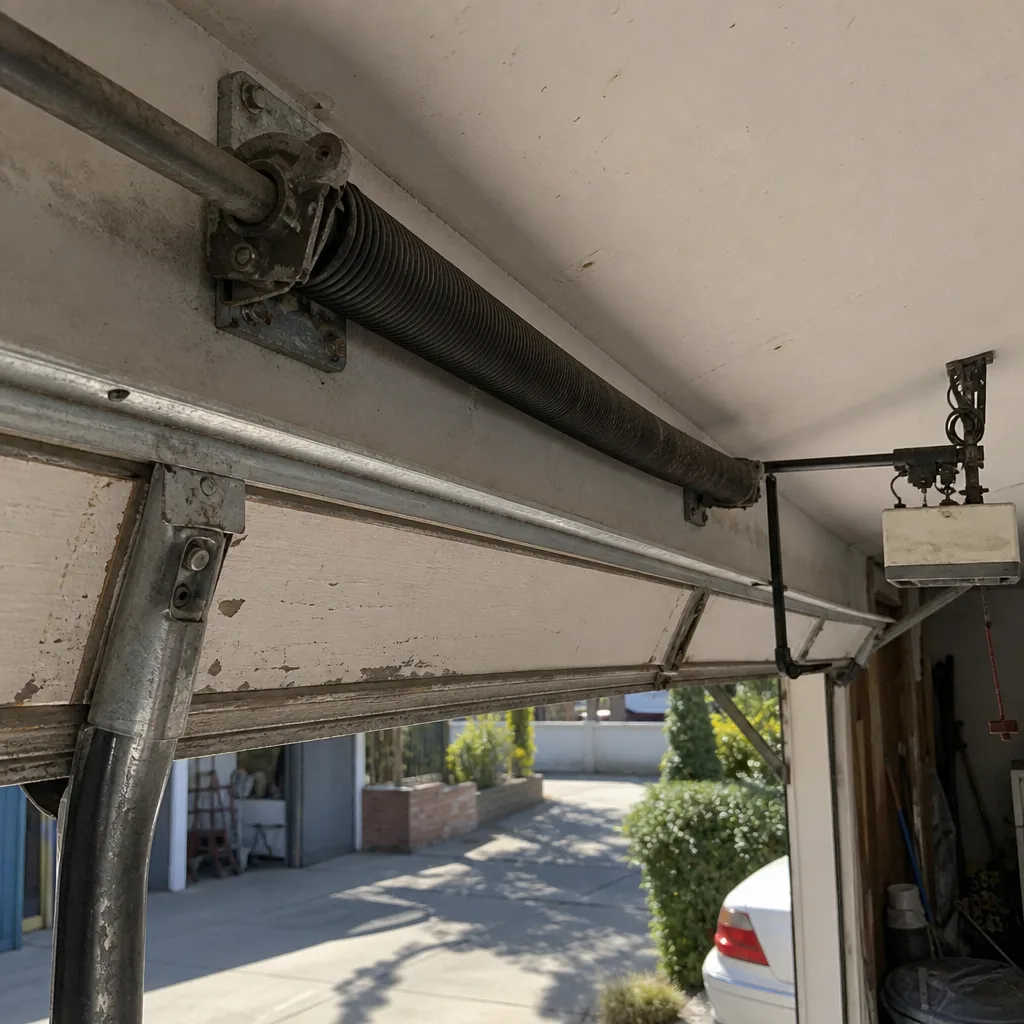 Before
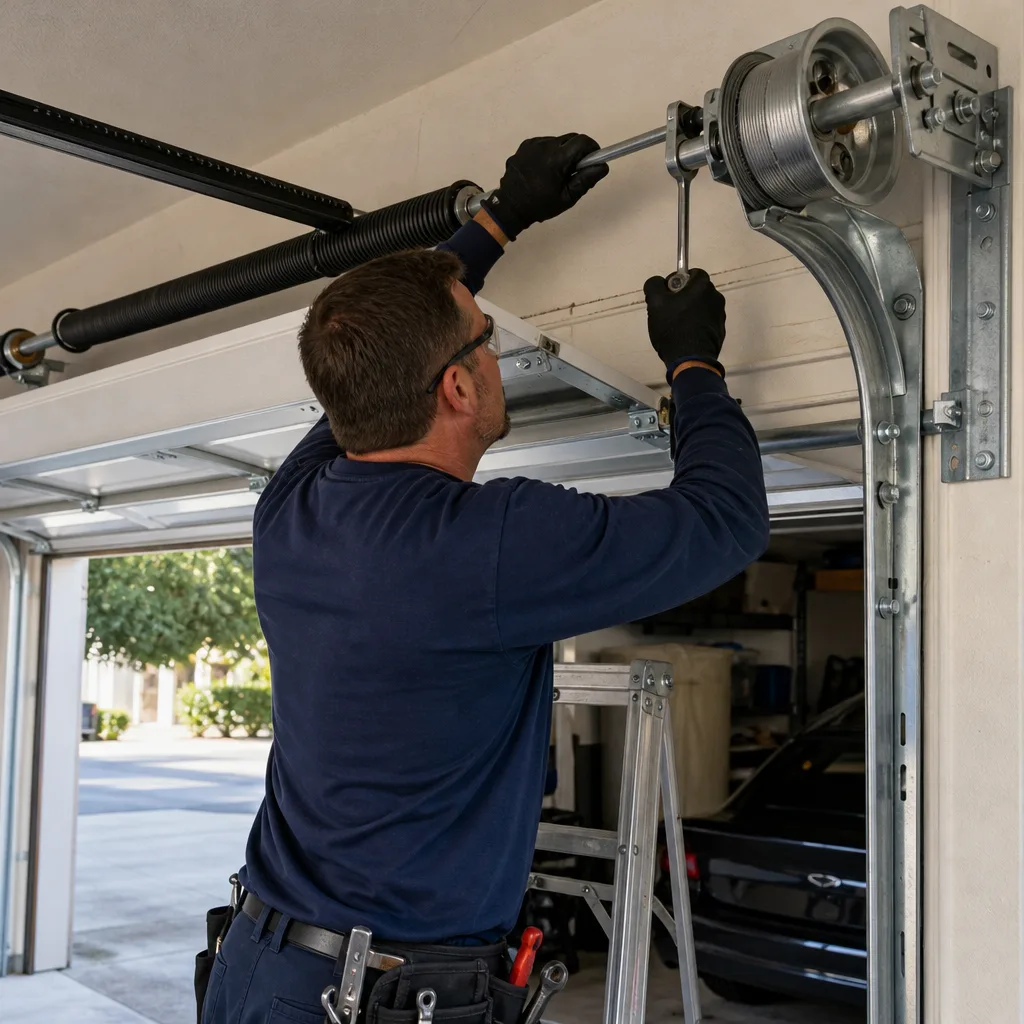 After
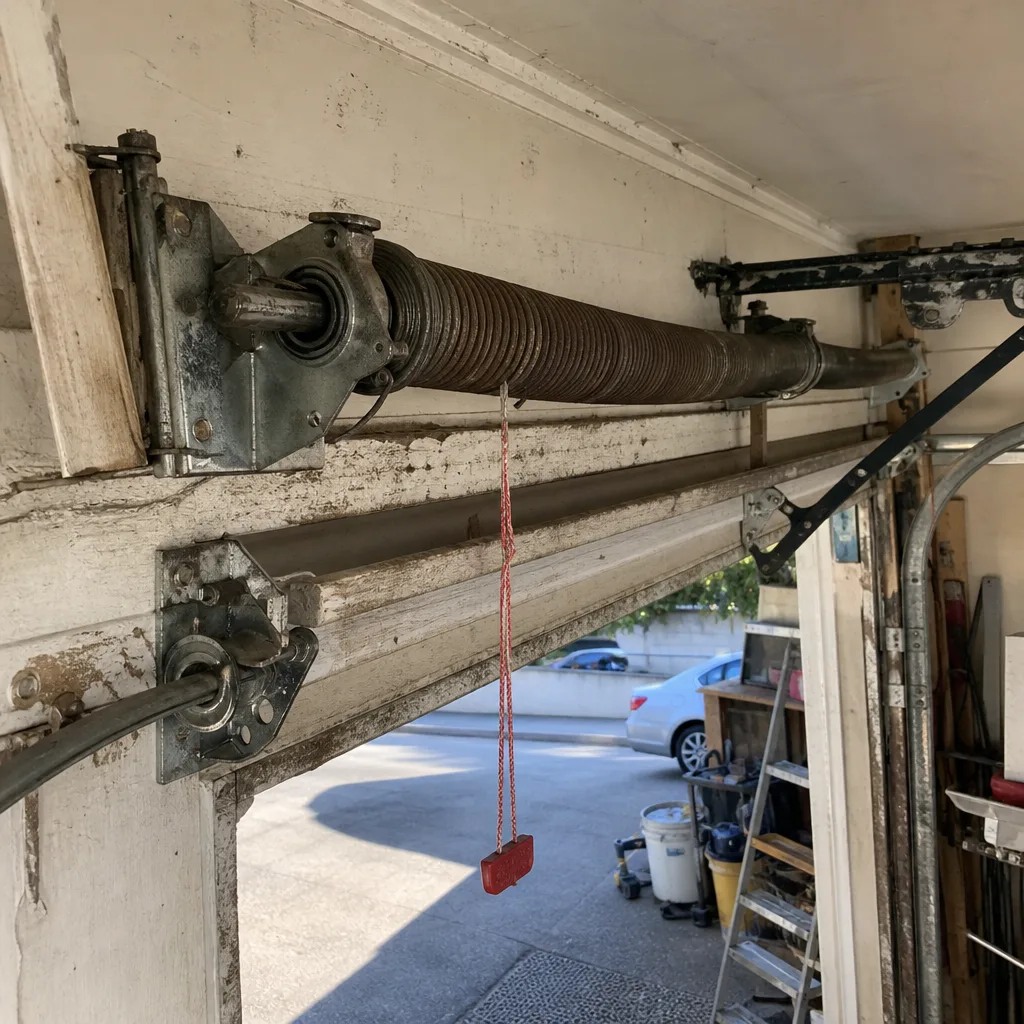 Before
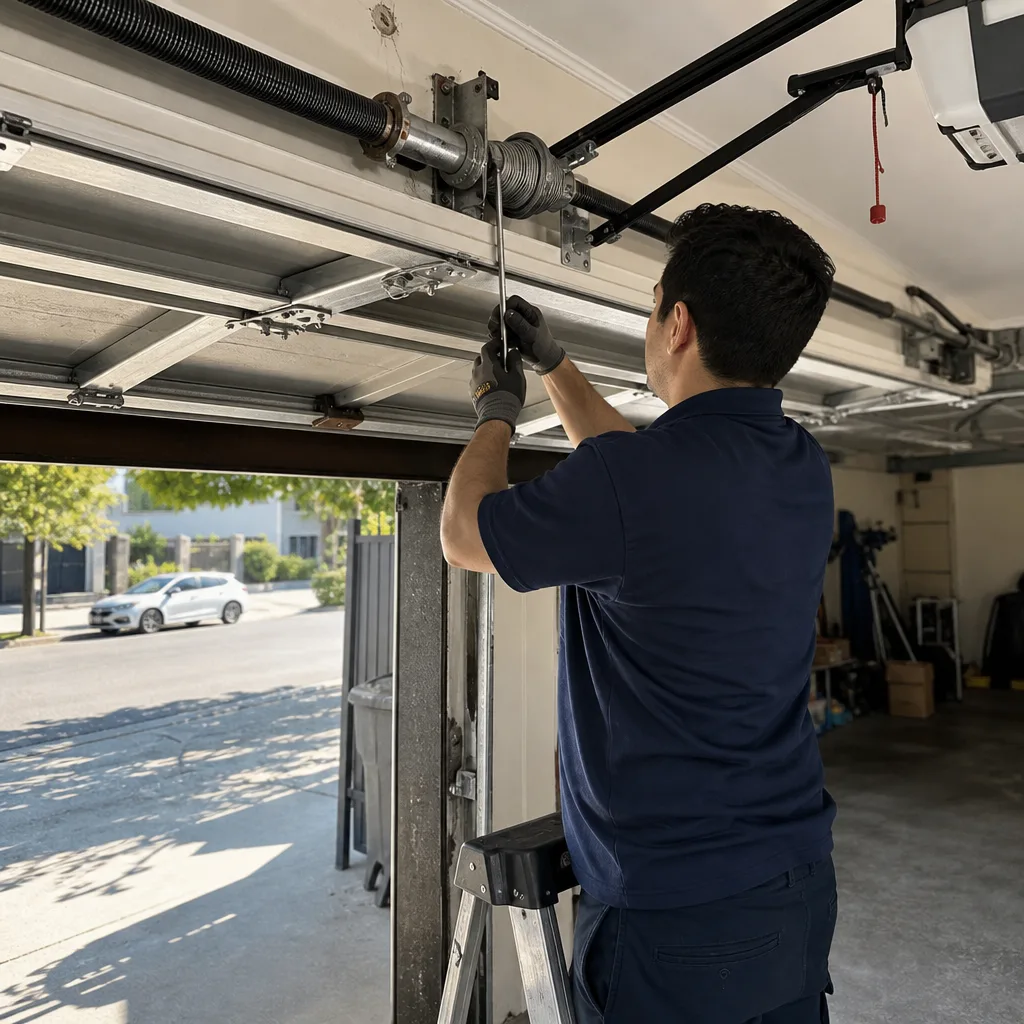 After
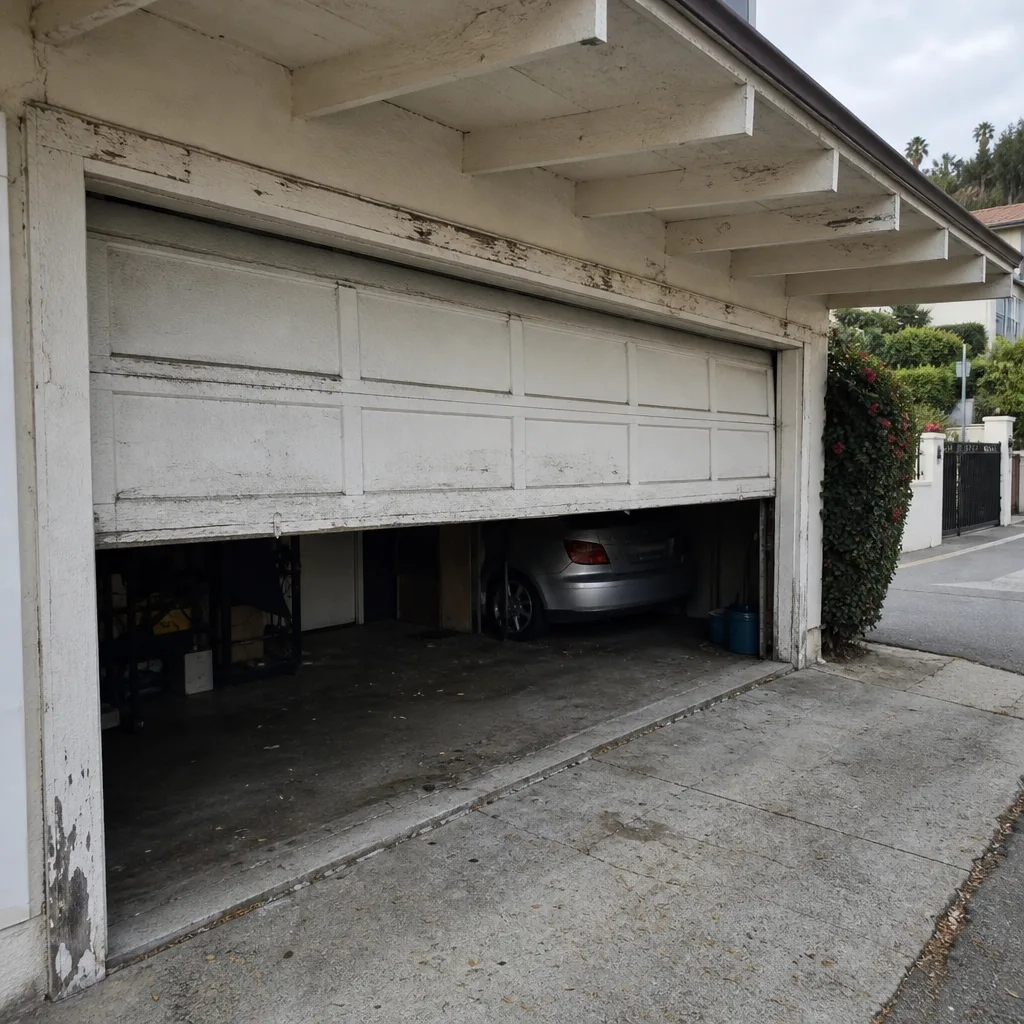 Before
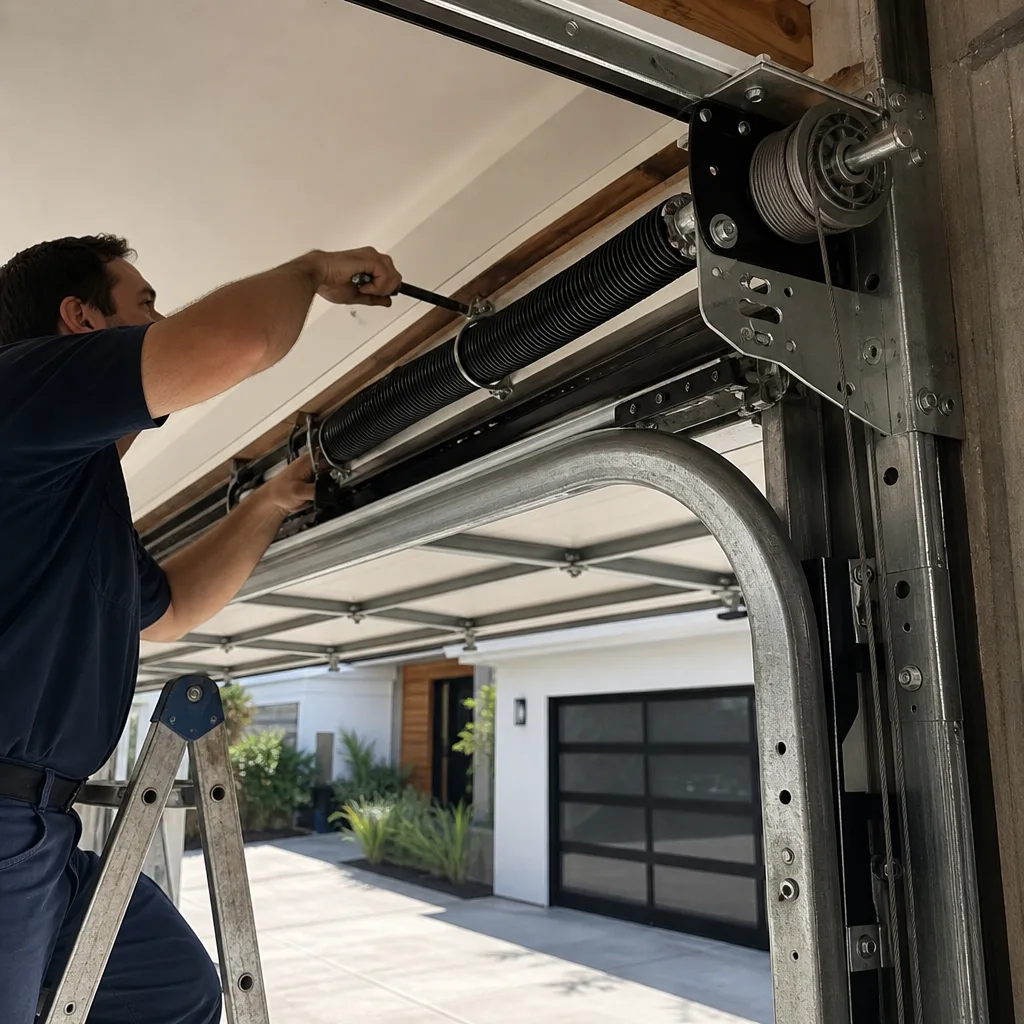 After
Frequently Asked Questions
No. Torsion springs and extension springs are under enough tension to cause severe injury or death if they release unintentionally. This is a professional-only task, regardless of your skill level or how many YouTube tutorials you’ve watched. The cost of a professional spring replacement in West Hollywood is typically $200 to $400, including parts and labor, which is a fraction of what an emergency room visit costs.
Safe homeowner tasks include lubricating moving parts, replacing the bottom weather seal, cleaning and realigning photo-eye sensors, reprogramming a LiftMaster or Chamberlain opener, and tightening loose bolts. These tasks use basic hand tools, carry minimal injury risk, and are explicitly permitted by manufacturer warranties.
For a like-for-like replacement in a single-family home, usually not, as long as you’re not changing the opening size or structural header. For multifamily buildings, fire-rated doors, or any work that changes the electrical circuit, yes, you need a permit. Check with the city’s building department or your HOA before starting any installation project.
If you install a new opener yourself and it fails due to installation error, the manufacturer may deny the warranty claim. LiftMaster, Chamberlain, and Genie all require professional installation for warranty coverage on the motor and gear assembly. However, routine maintenance, remote programming, and sensor alignment are homeowner tasks that do not affect warranty coverage.
Most repairs in West Hollywood range from $150 for a simple hinge or roller replacement to $400 for a torsion spring replacement. For full pricing details, see our Garage Door Cost Breakdown: The West Hollywood Homeowner’s Reference for 2026. Opener repairs typically run $150 to $350. A full door replacement can range from $900 to $3,500 depending on the door material, insulation, and whether permits are required. Golden Bear Garage Door Repair offers free estimates so you know the price before any work begins. The price is always quoted and agreed upon before any work starts.
Yes. We service LiftMaster, Chamberlain, Genie, Clopay, Amarr, Wayne Dalton, Craftsman, and Raynor systems, which covers the vast majority of garage doors and openers installed in West Hollywood homes. Whether your door is original from the 1980s or a recent installation from The Home Depot, we’ve worked on it before. One call covers door repair, opener repair, and full installation, no subcontracting needed. For Garage Door Opener Repair in Burbank or a Garage Door Installation in Burbank, the same brand-agnostic approach applies.
The Bottom Line
The DIY vs. professional question isn’t about how handy you are. It’s about correctly identifying which tasks carry mechanical risk, which ones void warranties, and which ones trip legal requirements. For a deeper look at staying ready, see our Garage Door Emergency Preparedness Guide for West Hollywood Homes. In West Hollywood, where older buildings, HOA rules, and California premises liability law all come into play, the line is clearer than most guides suggest. Lubricate, replace seals, clean sensors, and reprogram remotes all you want. Leave torsion springs, cables, track repairs, and permit-required installations to a licensed professional with liability insurance. That’s the whole decision, and now you have the information to make it correctly. For anything that falls on the professional side of the line in West Hollywood, call Golden Bear Garage Door Repair at (833) 467-4118 for a free estimate. We’ll tell you straight what needs fixing and what it costs before we touch a thing.
Written by the team at Golden Bear Garage Door Repair, serving West Hollywood since 2016.